Best Beaches in Vietnam by Season (2026): Where to Go and When
The best beaches in Vietnam depend on your travel month. Where to go, from My Khe and An Bang near Da Nang to Phu Quoc, Nha Trang, Quy Nhon, Con Dao and Lan Ha Bay, and when each is at its best.
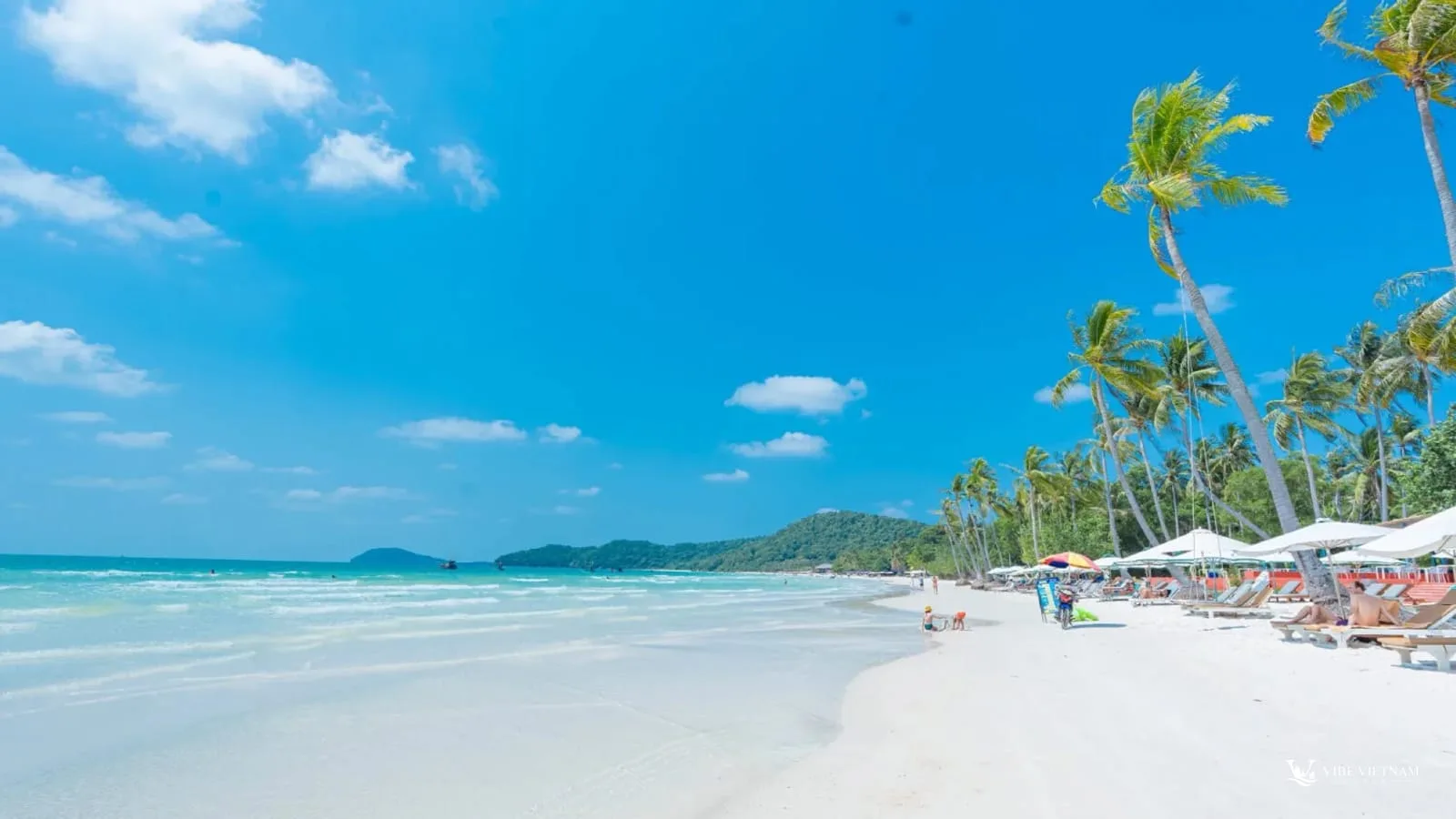
Vietnam has more than 3,000 kilometres of coastline, and the weather along it changes a lot from north to south. That is why the best beach in Vietnam depends on the month you travel.
The short version: go to Phu Quoc or Con Dao from December to March, Da Nang, Hoi An, Nha Trang or Quy Nhon from April to August, and the beaches around Ha Long and Cat Ba only from May to September. September to November is the hardest time for a beach holiday almost everywhere.
Key facts: Vietnam's beach seasons change by region. The south (Phu Quoc, Con Dao, Mui Ne) is dry from about November to April. The central coast (Da Nang, Hoi An, Quy Nhon, Nha Trang) is best from about March to August, and its rainy, stormy season runs roughly September to December, worst in October and November. The north (Ha Long Bay, Lan Ha Bay, Cat Ba) is only warm enough to swim from May to September, with typhoon risk from July. For the Australian summer holidays, the south is the reliable choice. For the June–July school holidays, the central coast is.
Best beaches in Vietnam at a glance
| Beach destination | Region | Best months | Months to avoid | Best for |
|---|---|---|---|---|
| Da Nang & Hoi An (My Khe, Non Nuoc, An Bang) | Central | April–August | October–November | Beach plus heritage towns |
| Phu Quoc (Sao Beach, Long Beach) | South, Gulf of Thailand | November–April | July–October | Resort stays, snorkelling, a December–January escape |
| Con Dao (Dam Trau) | South, offshore islands | March–June | September–November | Quiet, nature, sea turtles |
| Mui Ne | South-central | November–April | Rain showers May–October | Sand dunes, kitesurfing |
| Nha Trang (city beach, Doc Let) | South-central | February–August | October–November | Families, islands, a city beach |
| Quy Nhon (Ky Co, Eo Gio) | Central | March–August | September–November | Fewer crowds, seafood, coves |
| Lan Ha Bay & Cat Ba | North | May–September | December–March (too cool to swim) | Swimming and kayaking from a boat |
These months show the usual pattern. Seasons shift from year to year, so check the forecast and any storm warnings in the week before you travel.
Which beach to choose for your travel month
December to March: go south
This is the Australian summer holiday, and it lines up well with the dry season in southern Vietnam. Phu Quoc is the obvious pick, with calm water on the west coast and the widest range of resorts. Mui Ne is dry and windy, which kitesurfers love but swimmers may not. Con Dao comes into its best months from March.
The central coast is still cool and grey in December and January, and the north is too cold for swimming. Nha Trang starts to improve from February.
April to August: the central coast
Da Nang, Hoi An, Quy Nhon and Nha Trang have their calmest seas and most sunshine in these months, which takes in the June–July school holidays. It gets hot, often in the mid-30s °C by midday in June and July, so plan beach time for the morning and late afternoon.
Phu Quoc moves into its rainy season from about May. Con Dao stays good into June. The north is warm enough to swim from May, though July and August bring the heaviest rain there.
September to November: the hardest months
This is the wet, stormy season on the central coast, worst in October and November, when the sea is often too rough to swim and flooding can close roads. Phu Quoc is still wet in September and October and improves from November.
If you are travelling in the September–October school holidays, early September in Nha Trang is usually the mildest of these months, and Phu Quoc becomes reliable again in November. Keep the beach part short, build the trip around cities and heritage, and leave room to change plans if a storm comes through.
The best beach destinations in Vietnam, one by one
1. Da Nang and Hoi An: My Khe, Non Nuoc and An Bang
Da Nang sits on one long sandy coastline, with its international airport about ten minutes from the sea and Hoi An about 45 minutes down the coast. That makes it the easiest beach base in Vietnam to combine with sightseeing.
My Khe Beach (Bãi biển Mỹ Khê) is the main city beach, a long, wide stretch of sand lined with hotels and lifeguard posts. Locals swim there early in the morning, before the heat, and the water is usually calm from April to August.

Non Nuoc Beach (Bãi biển Non Nước) continues south below the Marble Mountains. It is quieter than My Khe, with large resorts set back from the sand, and suits travellers who want a resort stay between Da Nang and Hoi An.

An Bang Beach (Bãi biển An Bàng), a few kilometres from Hoi An's ancient town, is smaller, with seafood restaurants and beach bars along the sand. Ha My, just south of it, is quieter again.

For a day out, Lang Co is a curving bay on the far side of the Hai Van Pass, about an hour's drive north of Da Nang through the tunnel. It fits well into the drive between Da Nang and Hue.
From one base you can spend mornings on the beach, then visit Hoi An's old town, the Marble Mountains, Ba Na Hills or Hue, without another flight. Da Nang is about 1 hour 20 minutes by air from both Hanoi and Ho Chi Minh City.
From September to December the waves on this coast get big, and red flags go up on many days. Swim only near a lifeguard post and never when the red flag is flying.
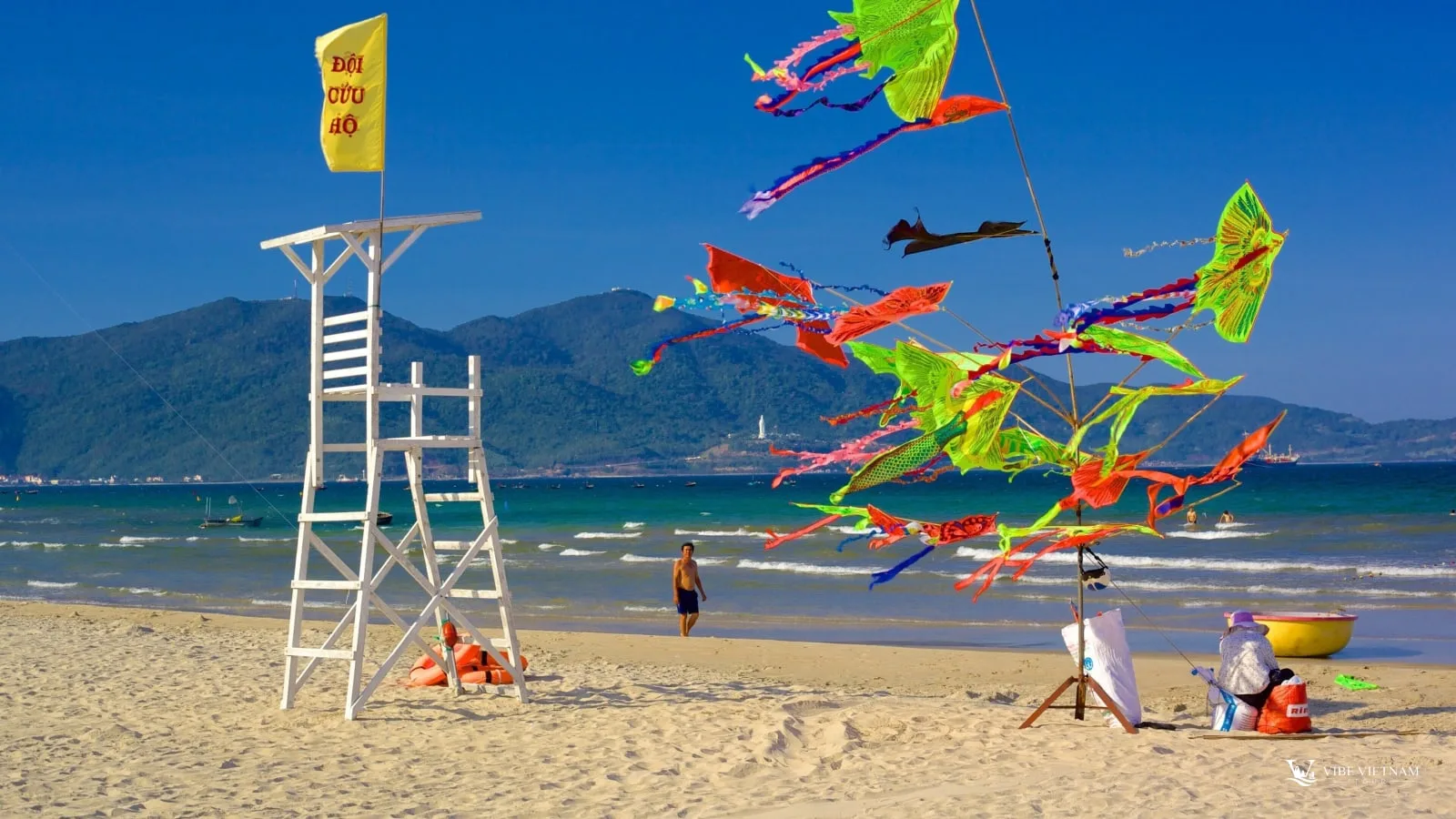
Our 6-day Da Nang, Hue and Hoi An tour combines the beach with all three towns. More options are on the Da Nang private tours page.
2. Phu Quoc: Long Beach and Sao Beach, best from December to March
Phu Quoc is a large island in the Gulf of Thailand, about an hour's flight from Ho Chi Minh City or two hours from Hanoi. It has more beach resorts than anywhere else in the country, and most couples and families use it for a few slow days at the end of a tour.
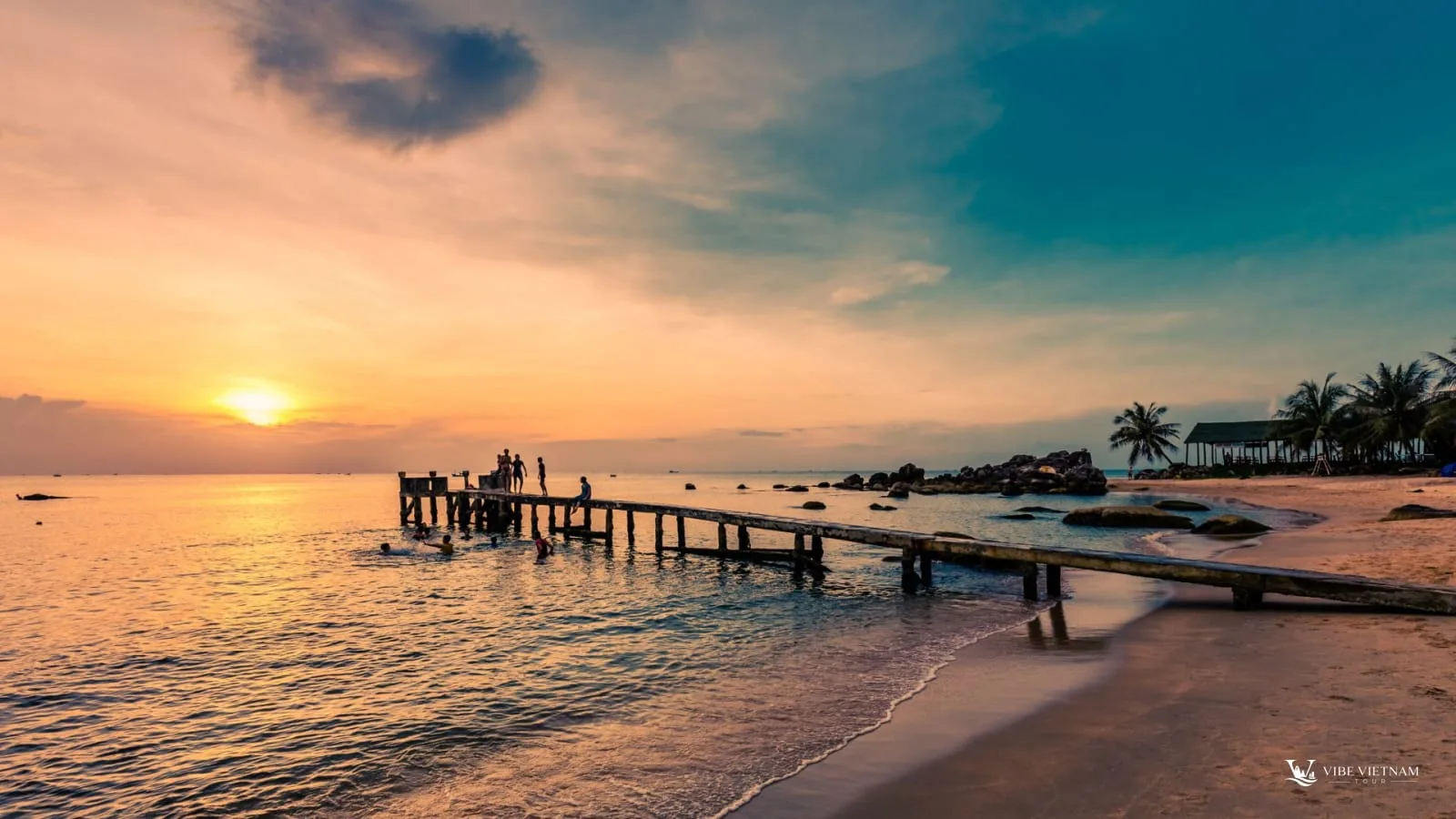
Long Beach (Bãi Trường) on the west coast is where most resorts are, and it faces the sunset. Sao Beach (Bãi Sao) on the south-east coast has fine white sand and shallow water. The small islands off An Thoi in the south are where you go snorkelling, usually on a day by boat.
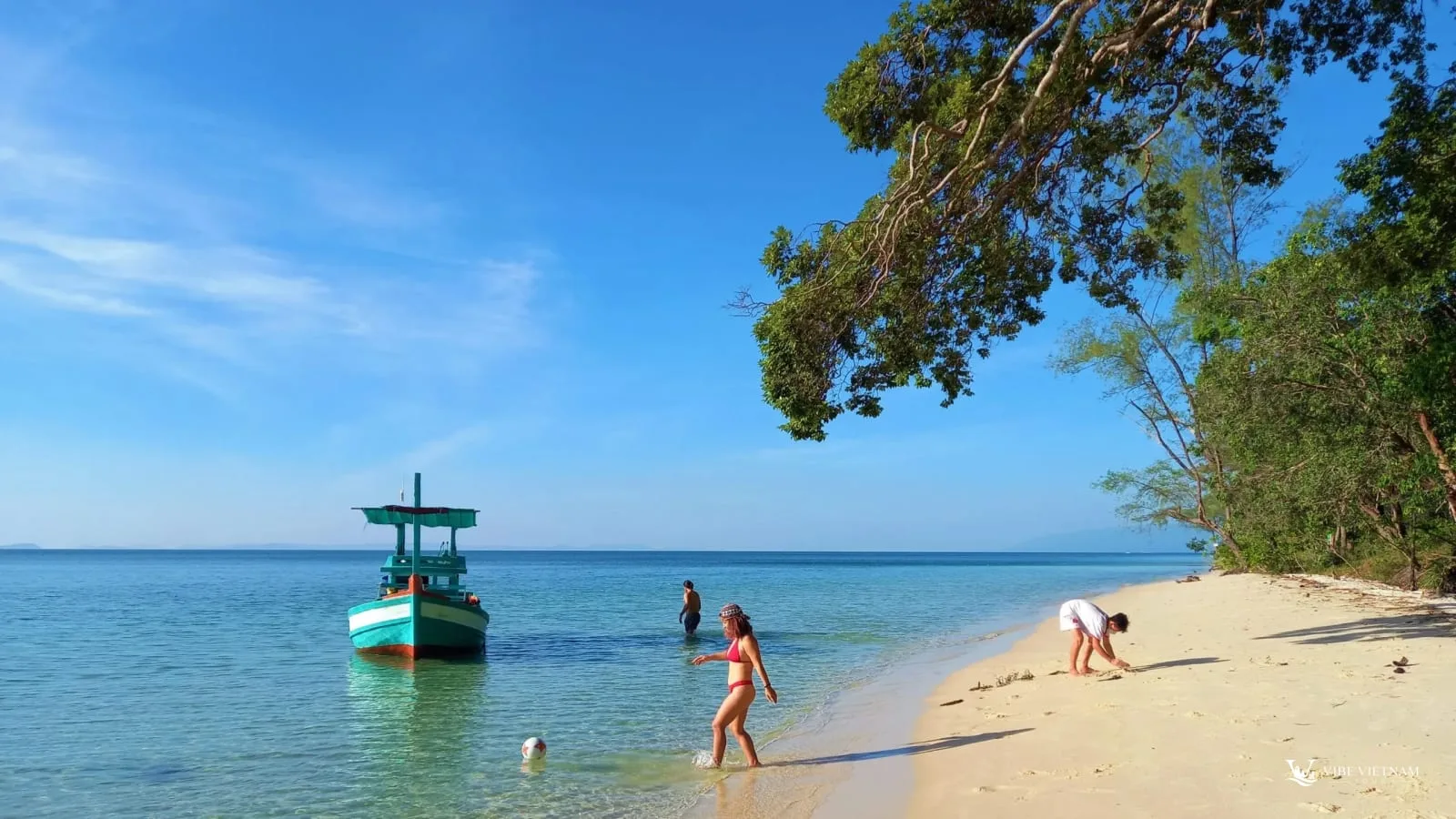
From about May to October the south-west monsoon brings rain and waves to the west coast. The east-facing beaches are usually more sheltered then.
Phu Quoc also has its own visa rule. Foreigners who fly straight into Phu Quoc's international airport and stay only on the island can stay up to 30 days without a visa. If you also visit mainland Vietnam, you need the normal e-visa or visa exemption for your passport. Sources disagree on whether a connection through Hanoi or Ho Chi Minh City still counts, so confirm with your airline before you rely on it.
For snorkelling around An Thoi, see the island-hopping and coral reef snorkelling day or browse all Phu Quoc private tours.
3. Nha Trang: city beach, islands and Doc Let
Nha Trang has a city beach running along the main seafront road and a bay full of small islands. The Hon Mun area is a marine protected area and the main snorkelling and diving spot. VinWonders, the theme park on Hon Tre island, and the hot-spring mud baths make it an easy choice for families with children.
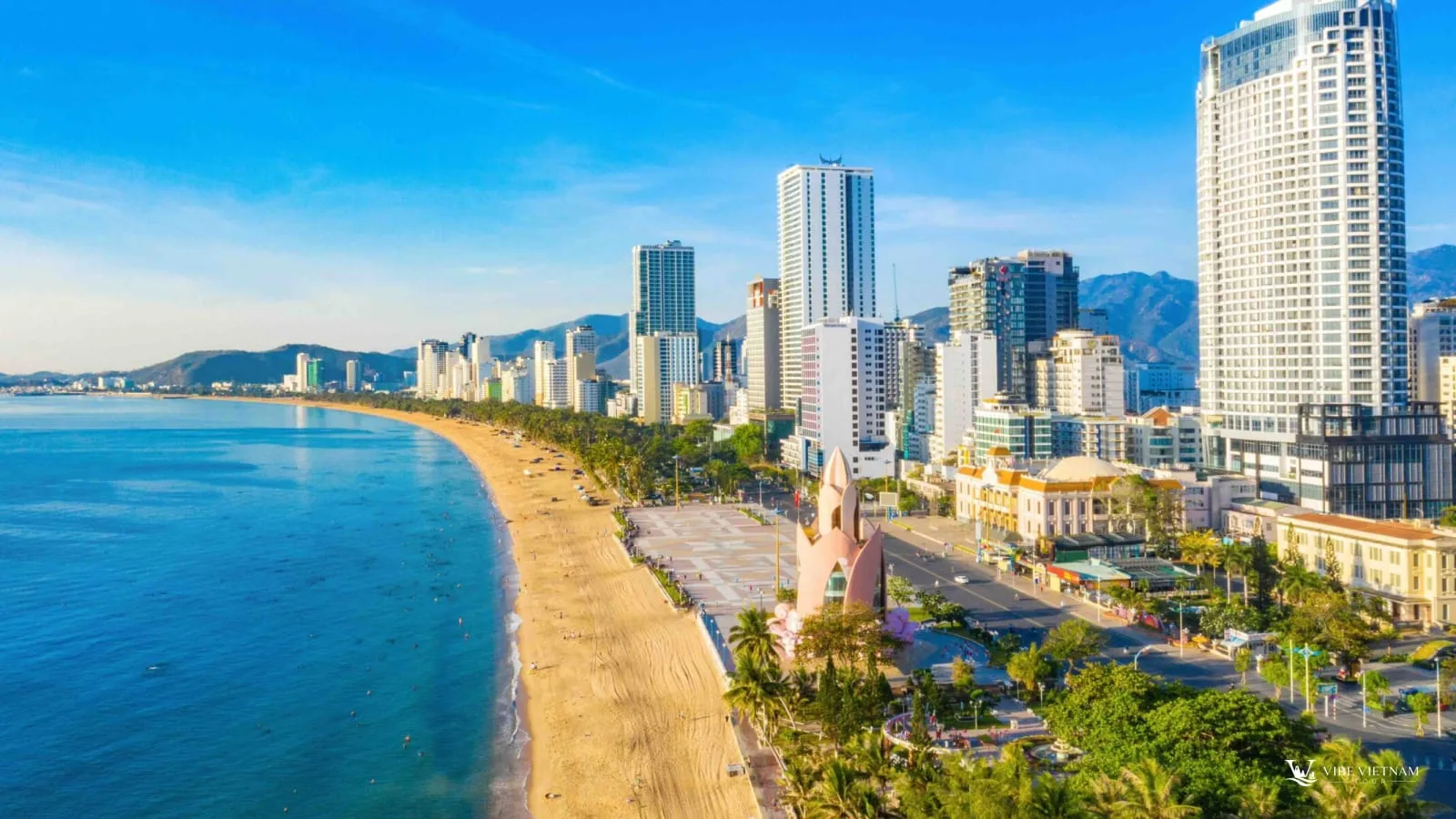
Flights land at Cam Ranh airport, about an hour from Ho Chi Minh City, and the drive into the city takes around 45 minutes. Bai Dai (Long Beach), near the airport, is quieter than the city beach. Doc Let Beach (Bãi biển Dốc Lết), about an hour's drive north of the city, has white sand, shallow water and only a handful of resorts.
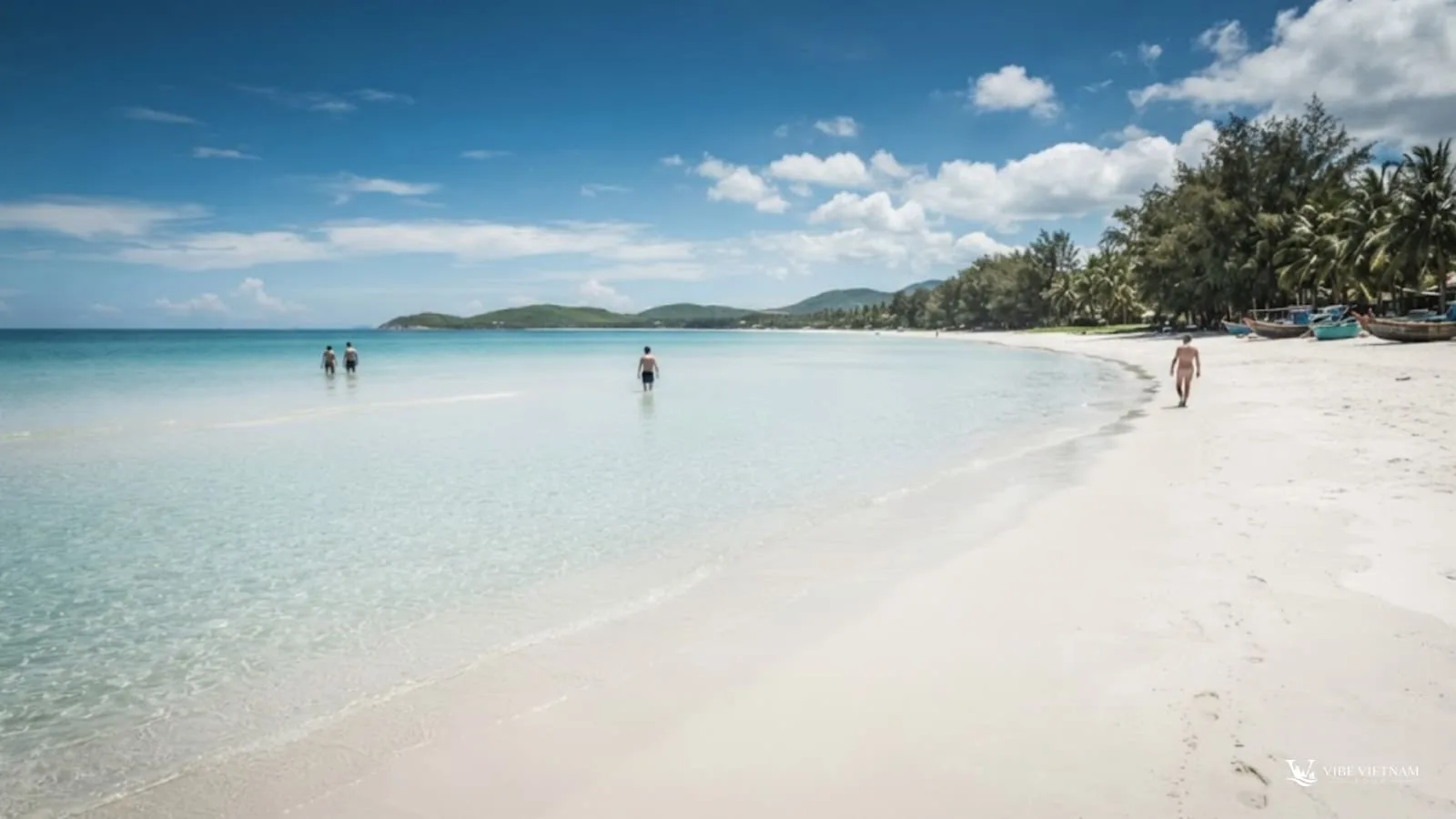
October and November are the wettest months, and storms do reach this part of the coast. Book island trips for the morning, when the sea is usually calmer.
See our Nha Trang private tours and the 4-day Nha Trang tour with three islands, VinWonders and a mud bath.
4. Quy Nhon: the quieter central coast
Quy Nhon is a small coastal city between Da Nang and Nha Trang with far fewer foreign visitors. Its best-known spots are Ky Co (Kỳ Co), a cove of clear water reached by boat or road from the city, and Eo Gio, a rocky headland with a walking path above the sea. Bai Xep, a fishing village just south of the city, has small guesthouses right on the sand.
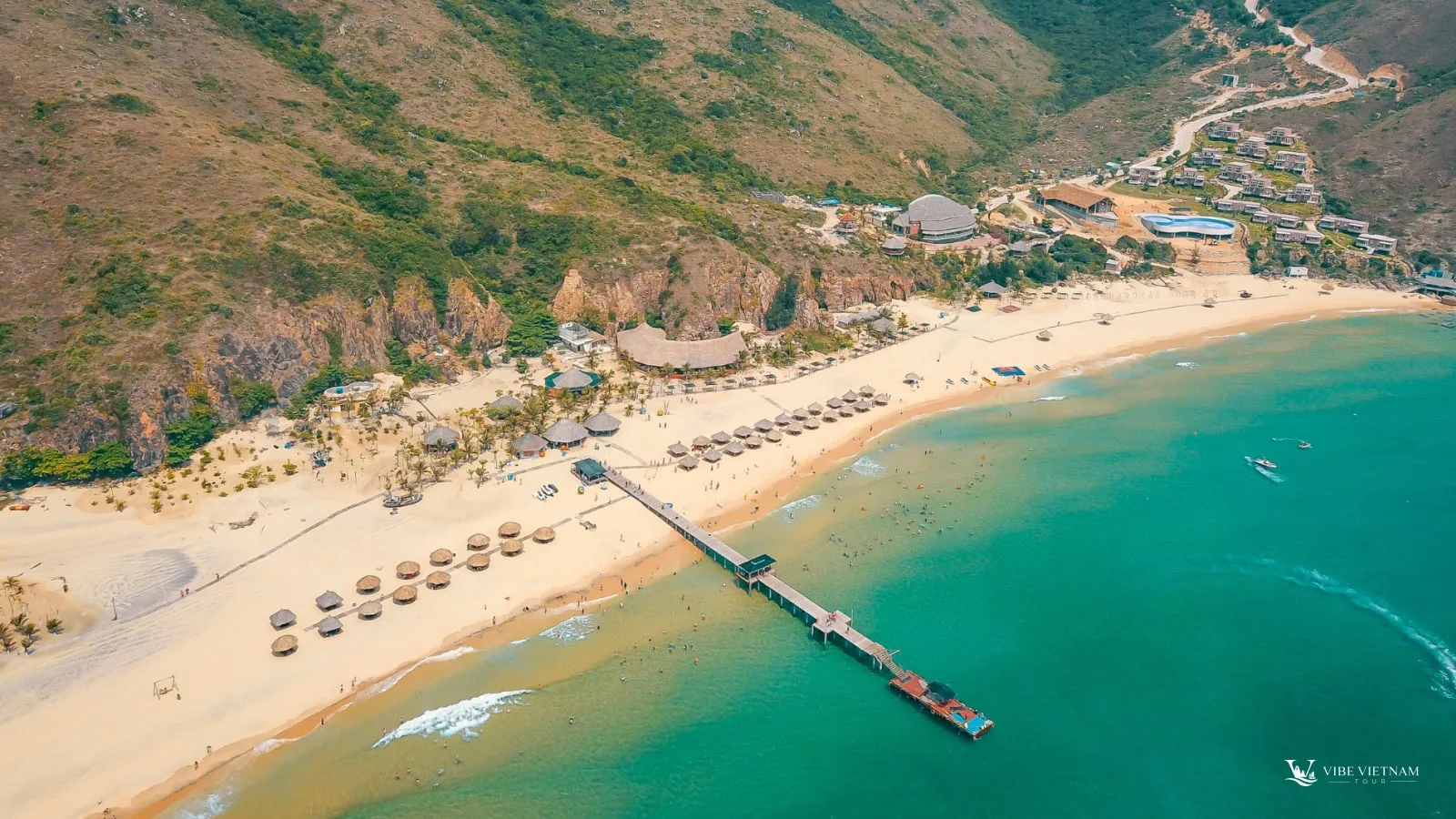
It suits travellers who have already been to Da Nang or Nha Trang and want a slower few days with good seafood.

From September to November the sea is often too rough for the Ky Co boats, and trips can be cancelled. Visit Ky Co early on a weekday to avoid the domestic weekend crowds.
5. Con Dao: for quiet and nature
Con Dao is a group of islands off the south coast, most of it protected as a national park. The island is quiet, with a few high-end resorts, empty roads and clear water. Dam Trau, near the airport, is the beach most people picture. The former prisons from the French and American war periods are open to visitors.
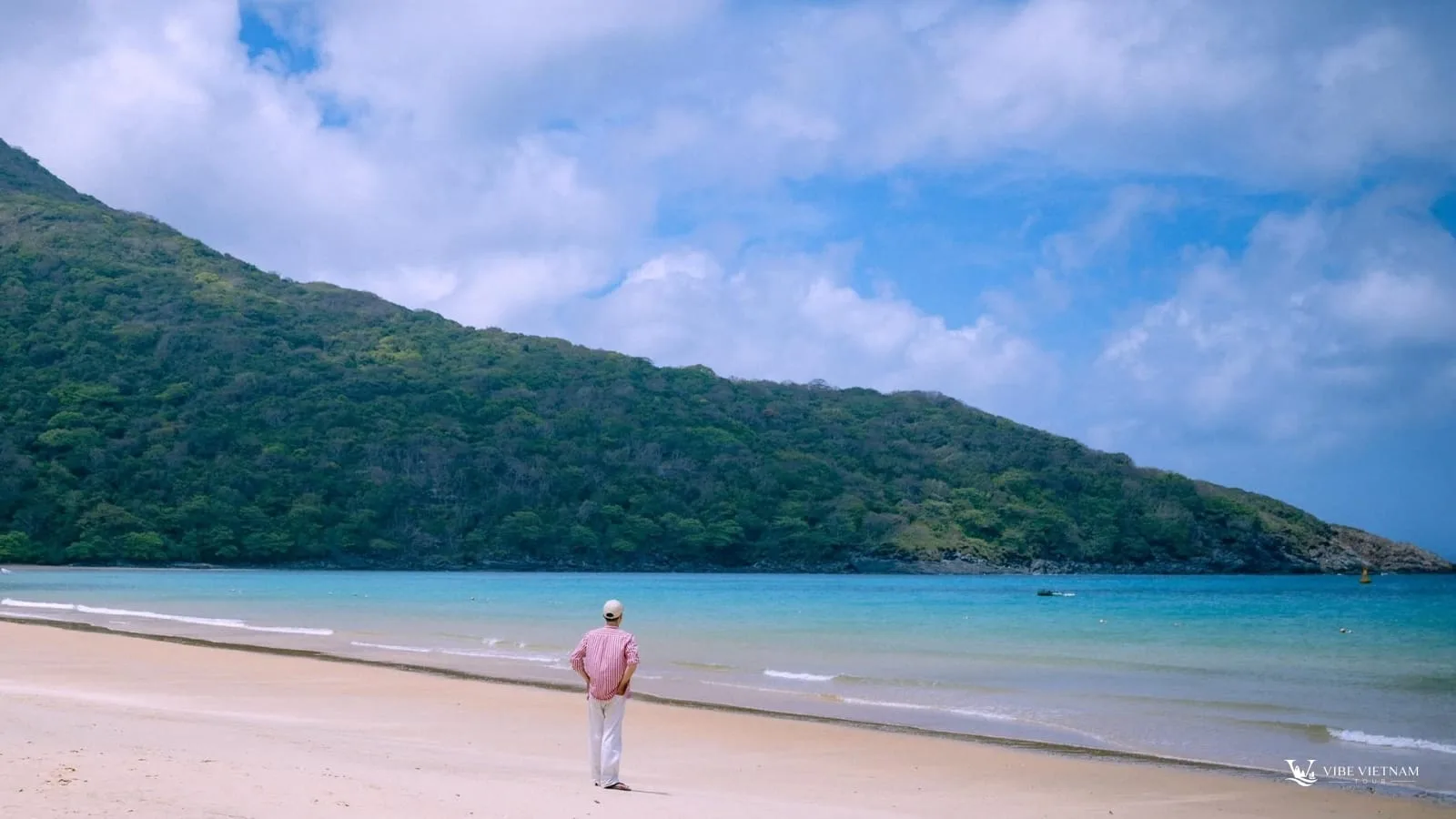
From about May to October, green turtles come ashore to nest on the outer islands. Turtle-watching trips are run through the national park and places are limited, so ask early if this is the reason for your visit.
Con Dao is about an hour's flight from Ho Chi Minh City on small aircraft. Seats sell out on holidays and weekends, and flights can be delayed by weather, so do not schedule Con Dao for the day before your flight home.
6. Mui Ne: dunes and wind
Mui Ne is about 3–4 hours by road from Ho Chi Minh City. It is best known for its red and white sand dunes and for steady wind from about November to March, which makes it one of Asia's main kitesurfing spots.
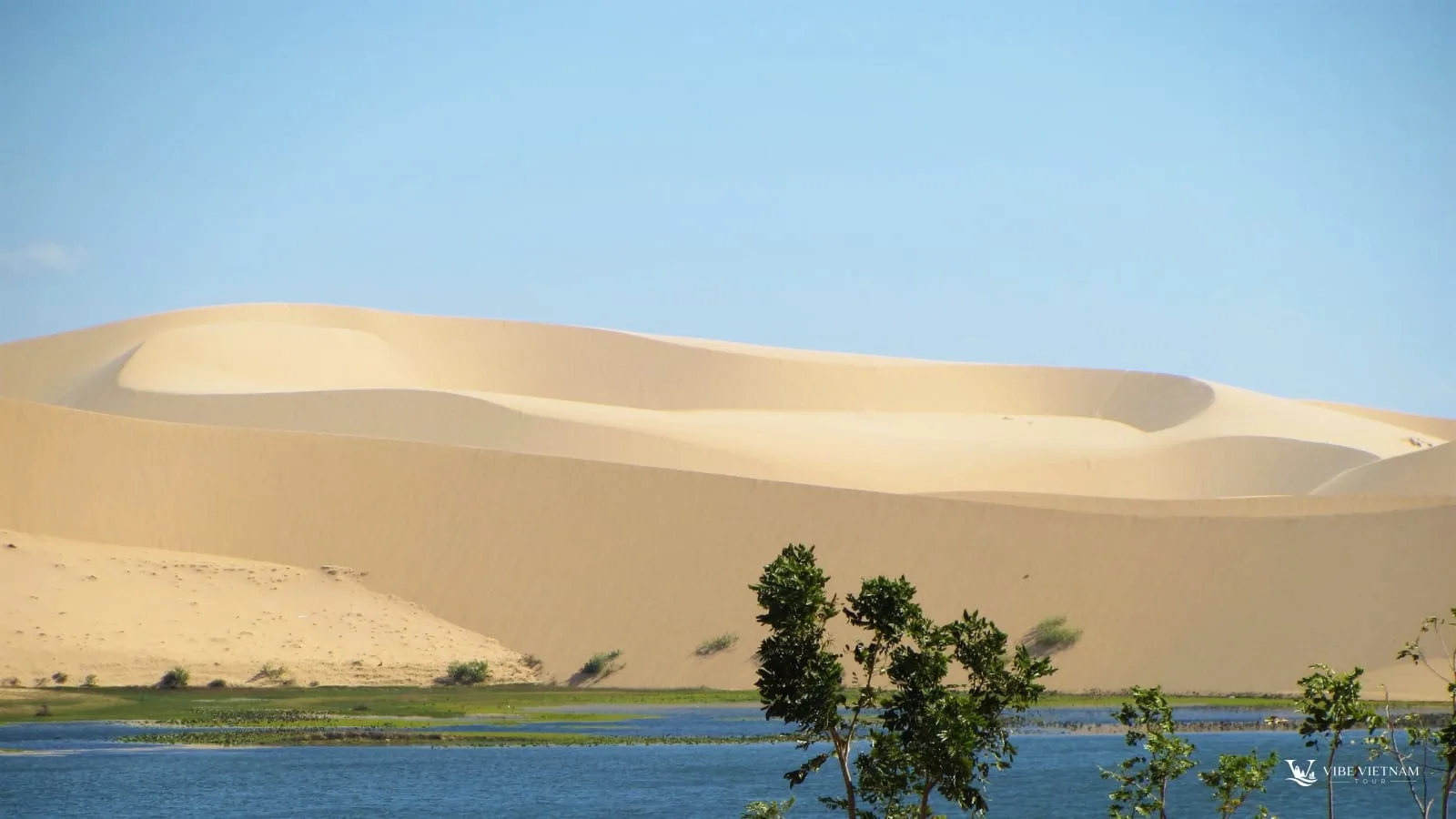
It is better for an active couple of days than for a long swimming holiday. Parts of the shoreline have eroded and the beach in front of some older resorts is now narrow, so look at recent guest photos before you book a hotel.
7. Lan Ha Bay and Cat Ba: swimming in the north
Ha Long Bay is not a beach destination in the usual sense. The swimming here is from a boat or at small sandy coves among the limestone islands. Lan Ha Bay, next to Cat Ba island, has more of these coves and fewer boats than central Ha Long, and kayaking between the islands is the highlight. Cat Ba town has small beaches of its own.

The closest beaches to Hanoi are at Ha Long city and at Do Son near Hai Phong, roughly 2–2.5 hours by expressway. The water there is often cloudy, so most visitors who want to swim go out by boat into Lan Ha Bay instead.
Lan Ha Bay is about 3 hours from Hanoi by road and ferry. The water is warm enough from May to September, but this is also the north's rainy season, and from July typhoons can stop boat trips for a day or two.
See the Lan Ha Bay day cruise from Cat Ba and our guide to quieter Ha Long Bay cruise routes.
Practical checklist for a beach trip in Vietnam
- Match the beach to your travel month using the table above.
- Respect the flags. A red flag means no swimming. The central coast has strong waves and rips from September to December, and some beaches have no lifeguards at all.
- Leave a buffer day between an island (Phu Quoc, Con Dao, Cat Ba) and your international flight home. Weather delays to island flights and ferries are common in the wet season.
- Get travel insurance that covers weather disruption if you travel between July and November.
- Time your beach hours. From April to August, midday on the central coast is very hot. Swim in the morning and late afternoon.
- Pack reef shoes for rocky coves such as Ky Co, Eo Gio and the bays around Cat Ba.
- Carry some cash. Sunbeds, drinks and seafood shacks on smaller beaches often take cash only. Our guide to paying in Vietnam covers cards and apps.
- Check your visa if you plan to fly straight into Phu Quoc, as the island has its own 30-day rule.
Adding beach days to a private tour
A common way to see Vietnam is a tour of Hanoi, Ha Long Bay and Hoi An that ends with three or four nights on a beach. On a private tour we choose that beach for your dates, so a December trip ends in Phu Quoc and a July trip ends in Da Nang, Hoi An or Nha Trang. We book the domestic flights, airport transfers and boat days. If the forecast turns bad, we can usually move a boat or island day to another day of your stay rather than lose it.
Our 9-day family tour from Hanoi to Phu Quoc shows how a beach finish fits into a full trip, and we adjust any route to the month you travel.
Related Vietnam travel guides
Frequently asked questions
What is the best beach in Vietnam?
It depends on the month. From April to August, My Khe and Non Nuoc in Da Nang, An Bang near Hoi An, Nha Trang and Ky Co in Quy Nhon are at their best. From December to March, Phu Quoc (Long Beach and Sao Beach) has the most reliable weather. For quiet and nature, Con Dao is best from March to June.
When is beach season in Vietnam?
It changes by region. The south (Phu Quoc, Con Dao, Mui Ne) is dry from about November to April. The central coast (Da Nang, Hoi An, Quy Nhon, Nha Trang) is best from about March to August. The north (Ha Long Bay, Lan Ha Bay, Cat Ba) is warm enough to swim only from May to September.
Is Phu Quoc or Nha Trang better for a beach holiday?
They peak at different times. Phu Quoc is best from November to April and suits a quiet resort stay with snorkelling. Nha Trang is best from February to August and suits families who want island trips, VinWonders and mud baths, with a lively city beach.
Is Da Nang or Nha Trang better for a beach holiday?
Both are best from about April to August. Da Nang suits travellers who want beach days plus Hoi An, Hue and Ba Na Hills nearby. Nha Trang suits families and anyone who wants island trips, snorkelling, VinWonders and mud baths.
What is the closest beach to Hanoi?
The closest beaches are at Ha Long city and at Do Son near Hai Phong, roughly 2–2.5 hours by expressway, but the water there is often cloudy. For swimming, most visitors take a boat into Lan Ha Bay near Cat Ba, about 3 hours from Hanoi, between May and September.
Do I need a visa to visit Phu Quoc?
Foreigners who fly directly into Phu Quoc International Airport and stay only on the island can stay up to 30 days without a visa. If you also visit mainland Vietnam, you need the normal e-visa or visa exemption for your passport. Confirm the rules for connecting flights with your airline.
Tours featured in this story

Central Vietnam Heritage Trail 6 Days: Da Nang, Hue, Hoi An & Golden Bridge


Want a beach finish to your Vietnam trip?
Tell us your travel month and we will suggest the beach with the best weather for those dates, built into a private itinerary.
Plan my beach daysMore stories you may like

Vietnam Trip Cost for 2 People: Total Budget for Couples (2026)
What a Vietnam trip really costs for two: private land tour prices for 7, 10 and 14 days, return flights from...

Payment Apps in Vietnam for Tourists (2026): How to Pay VietQR, Cards & Cash
How tourists from Australia, the US, Europe and Asia can pay in Vietnam: use your home app if your country has...

Tam Coc Travel Guide: River, Rice Fields & Bich Dong
A practical guide to travelling in Ninh Binh involving Tam Coc: covering the river boat trip, Bich Dong, cycli...