Payment Apps in Vietnam for Tourists: QR, Cards & Cash (2026)
How tourists from Australia, the US, Europe and Asia can pay in Vietnam: use your home app if your country has QR cross-border links, or set up a wallet like Moreta Pay, LocalPay or Wise before you travel.
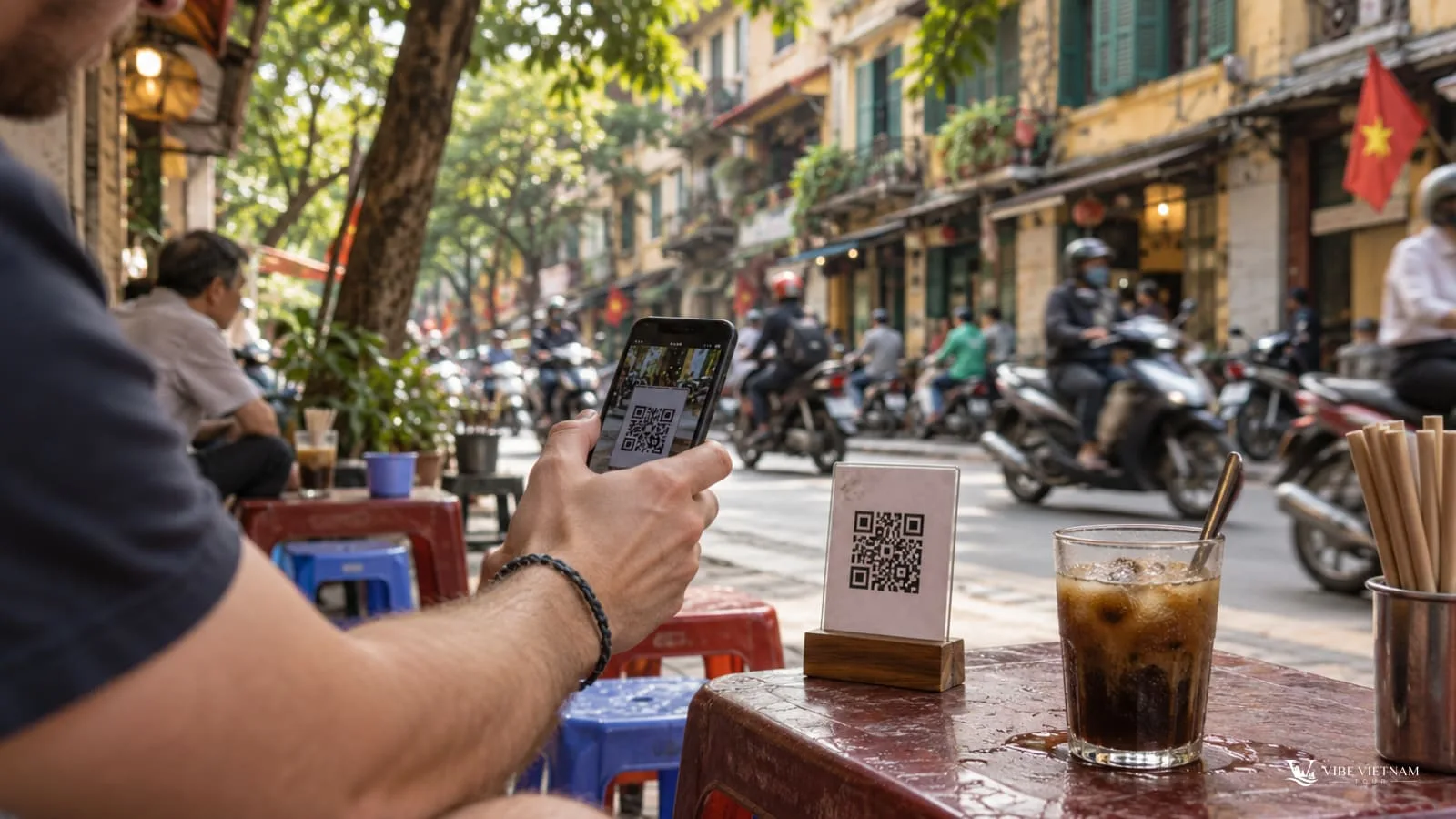
Vietnam runs on QR codes. From a coffee cart in Hanoi to a silk stall in Hoi An, the checkout is usually a printed VietQR code on the counter. For foreign visitors the question is which app on your phone can read that code. In 2026 the answer depends on where you are from: travellers from several Asian countries can scan with their home banking app, while visitors from Australia, the US, Europe and Japan need to set up a third-party wallet before they land.
The key payment facts are that VietQR is accepted at most shops, cafés and market stalls in Vietnam; Visa and Mastercard work well at hotels, supermarkets and larger restaurants; and cash is still needed in rural areas and at small street vendors. If your country has a cross-border QR link with Vietnam, your home app may work directly. If not, a wallet such as Moreta Pay or LocalPay lets you scan VietQR codes without opening a Vietnamese bank account.
At a glance: payment options for foreign visitors
| Option | Who it suits | How to fund it | Published fee | Scans VietQR? |
|---|---|---|---|---|
| Home banking app (Alipay, Korean GLN apps, etc.) | Visitors from China, South Korea, Singapore, Thailand, Laos and Cambodia | Your existing bank account or wallet balance at home | Set by your home bank; usually competitive | Yes, where cross-border links are live |
| Moreta Pay | Visitors from Australia, the US, Europe and Japan | Visa/Mastercard, bank transfer, SEPA, Faster Payments, PayID (AUD) | 1.5% per transaction plus the in-app exchange rate | Yes |
| LocalPay | Users comfortable with stablecoins; card top-ups vary by country | Card, Apple Pay, Google Pay (availability varies) or USDC/USDT | Depends on top-up method; check in-app | Yes |
| Wise | Anyone sending money to a Vietnamese bank account or scanning Alipay+ codes | Bank transfer from your Wise account or card | Transfer fee plus mid-market rate; check the fee shown in the app for QR payments | No direct VietQR scan; scans Alipay+ codes |
| Cash (VND) | Everyone, as a backup | ATM withdrawal or currency exchange | ATM operator fee plus your bank's charges | N/A |
Fees and limits are as published in October 2026. Always check the app or your bank before you travel, since rates and availability change.
How payments work in Vietnam
In Vietnam the move from cash to QR happened fast. The VietQR standard, run by NAPAS, is now displayed at counters everywhere alongside stickers for MoMo and ZaloPay, the two dominant local wallets. For a visitor this means two things: you can pay digitally at far more places than a few years ago, and you still need a small amount of Vietnamese dong for the stalls that have not switched over.
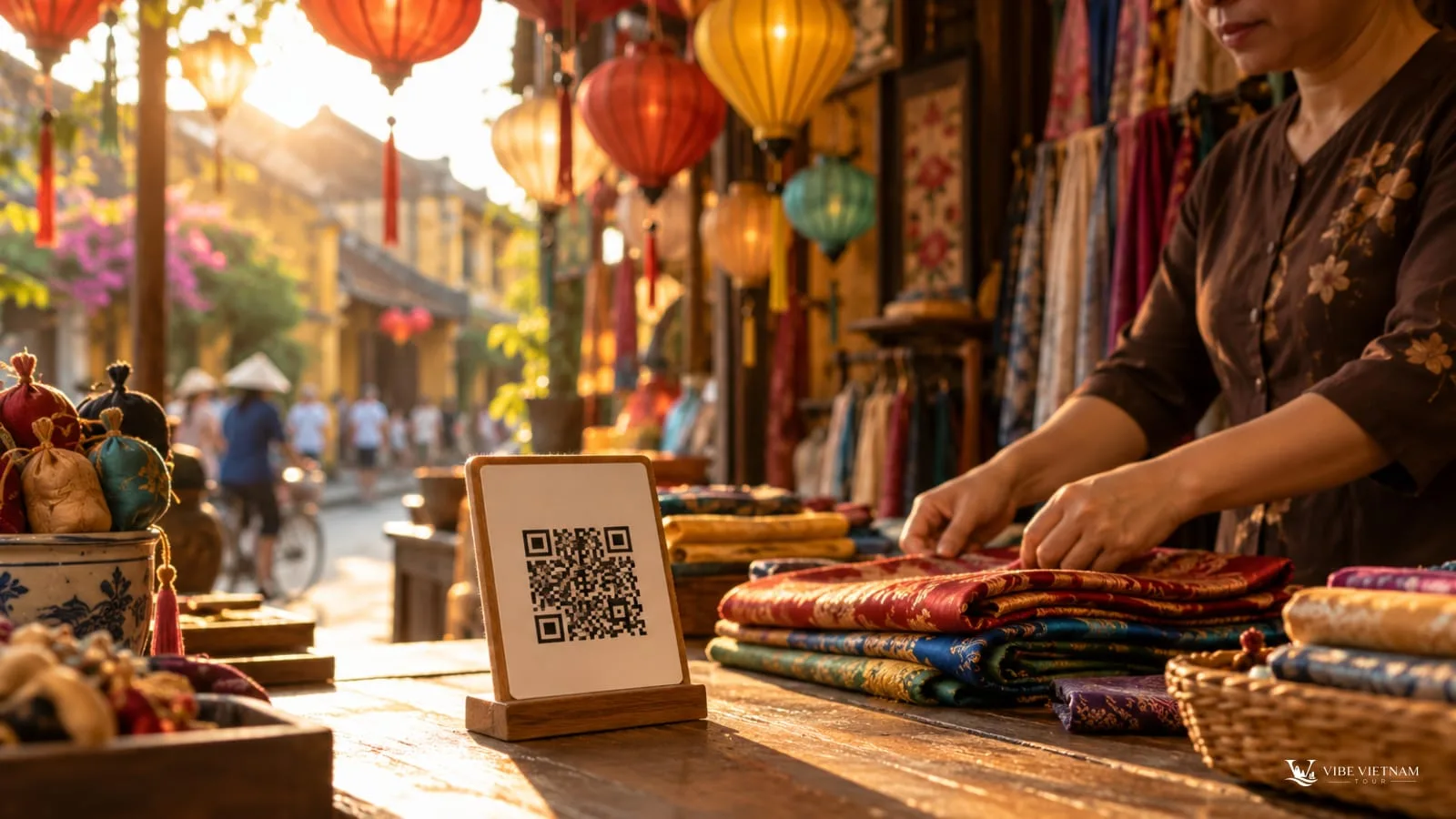
Credit and debit cards are accepted at hotels, chain supermarkets, upscale restaurants and major tourist attractions. Small cafés, family-run restaurants, night markets and countryside shops often do not have a card terminal. A useful rule is to carry a card for hotels and big-ticket purchases, an app for daily QR payments, and cash for everything else.
Option 1: Use your home app (China, South Korea, Singapore, Thailand, Laos and Cambodia)
If you are from one of the countries below, check your banking or wallet app before you leave home. Several cross-border QR links went live in 2026, and more are planned.
China: Alipay and WeChat Pay
On 3 April 2026 NAPAS, Vietcombank and Ant International launched a cross-border QR service that lets Alipay users scan VietQR codes in Vietnam. A separate partnership between NAPAS, BIDV and Weixin Pay brought WeChat Pay support from 6 August 2026. Chinese visitors can now pay at participating shops, restaurants and tourist sites by scanning the same QR codes locals use. Check inside your app to confirm that Vietnam appears in the supported-destinations list.
South Korea: GLN network apps
From 23 April 2026, Korean banking and e-wallet apps on the GLN International network can scan VietQR codes at merchants across Vietnam. The service was launched by NAPAS, GLN International, BIDV and Hana Bank. Transactions are processed in real time through the settlement infrastructure of Hana Bank and BIDV. If you use a major Korean bank app or wallet, look for the VietQR or overseas-payment option.
Singapore, Thailand, Laos and Cambodia
On 2 July 2026 NAPAS, Liquid Group and VietinBank launched a cross-border QR service connecting Vietnam and Singapore. Users of payment apps on Liquid Group's RoamQR network can scan VietQRGlobal codes at acceptance points across Vietnam. Tourists from Thailand, Laos and Cambodia also have live QR payment links with Vietnam. In the first eight months of 2026, transactions by Thai, Laotian and Cambodian visitors surged nearly eightfold in volume compared with the previous year, according to NAPAS data reported by Vietnam News.
Japan, Australia, the US and Europe
At the time of writing, Japan, Australia, the United States and European countries do not yet have a live cross-border QR link with Vietnam. Japan is in the planning stage. If you are from one of these countries, skip to Option 2.
Option 2: Set up a third-party wallet (for visitors from Australia, the US, Europe and Japan)
When your home banking app does not read Vietnamese QR codes, a wallet app is the next best thing. You fund it from your home bank account or card, then scan VietQR codes just like a local.
Moreta Pay
Moreta Pay is a wallet designed for travellers and does not require a Vietnamese bank account. You download the app, verify your identity in the app, then add money.
Top-up options include:
- Bank transfer: SEPA (euro), Faster Payments (GBP), PayID (AUD) and others. PayID costs 1.5% plus 1 USD. SEPA and Faster Payments cost 1.50 USD. Transfers over certain thresholds are free.
- Card: Visa, Mastercard, Apple Pay and Google Pay. The published fee is 2.5% (minimum 1.50 USD) for instant card top-ups.
- Crypto: USDC and USDT on Solana. Check in-app for current fees.
For payments in Vietnam, Moreta charges a flat 1.5% per transaction at the live exchange rate shown in the app. The maximum payment is 50 million VND per transaction and the weekly limit is 160 million VND. The app scans VietQR, MoMo and ZaloPay codes, which covers most merchants.
As with any wallet, test it with a small top-up and a small payment before you travel, and check the exact fee and rate inside the app on the day.
LocalPay
LocalPay (localpay.asia) is a non-custodial wallet built on Solana. It supports top-ups by card, Apple Pay, Google Pay and stablecoins (USDC and USDT). Card top-ups are not guaranteed from every country; some users report that they had to fund the wallet with crypto instead. If you are comfortable with stablecoins, LocalPay is a viable option. If you prefer traditional banking, test the card top-up early.
Do not confuse LocalPay with localpay.com, which is a different app based in the United States.
Wise
Wise is strongest for sending money to a Vietnamese bank account when you know the recipient's full name and account number. The exchange rate is transparent and the transfer fee is low.
The Wise app can also scan Alipay+ QR codes, which are common in tourist hubs in Vietnam. This is a useful option for daily small purchases where you see the Alipay+ symbol. The Wise card works at ATMs and some shops, but older POS terminals in Vietnam sometimes decline it. Wise does not scan standard VietQR codes directly.
Revolut
Some travellers carry a Revolut card for ATM withdrawals and card payments. It is useful as a backup card.
Cash and ATMs: the essential backup
Even with the best app, you need Vietnamese dong in your pocket. Small notes are especially useful: 20,000, 50,000 and 100,000 VND cover coffee, snacks, tips and motorbike parking.
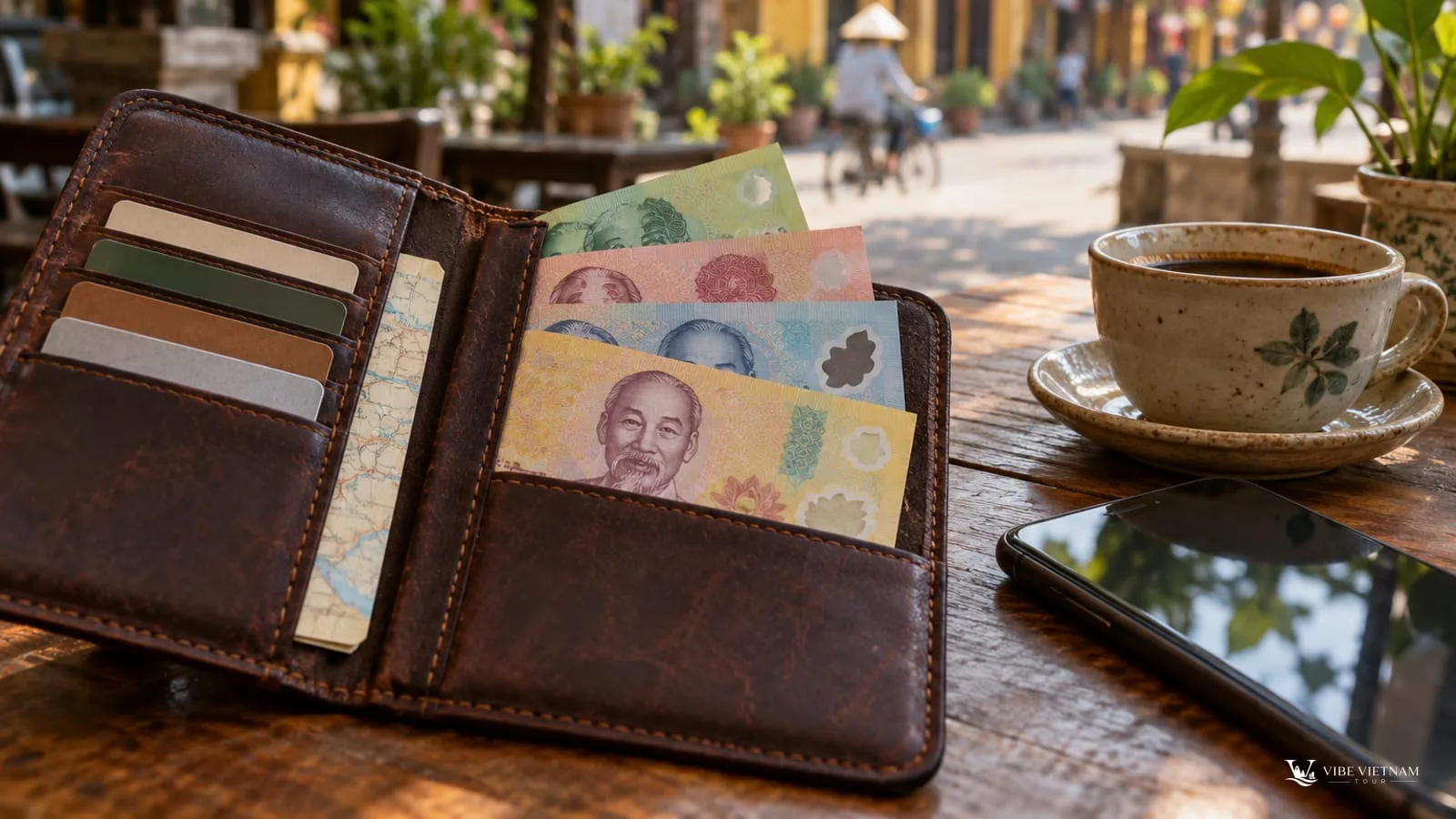
ATMs are common in cities and most accept foreign cards. They usually charge a fee per withdrawal, shown on screen before you confirm, on top of whatever your home bank charges. Some ATMs also apply their own exchange rate. To avoid surprises, withdraw a sensible amount in one go rather than making frequent small withdrawals, and always let your home bank know you are travelling.
Keep one card in your wallet and a second card locked in your hotel safe. If your primary card is lost, blocked or swallowed by a machine, you have a spare.
Practical checklist before you travel
- Check whether your home banking app lists Vietnam as a supported QR destination.
- If you need a wallet, download Moreta Pay or LocalPay, complete identity verification and fund it with a small test amount at least a few days before departure.
- Make one test payment (even a coffee) so you know the flow works.
- Notify your home bank of your travel dates so they do not block your card.
- Withdraw or exchange some Vietnamese dong before you leave the airport.
- Keep a second card and a small cash reserve separate from your daily wallet.
- Do not rely on a single app or card. Networks fail, phones run out of battery and apps update.
What this means on a private tour
If you book a private tailor-made tour with Vibe Vietnam Tour, most of your major costs are prepaid: private car transfers, hotels, guides, entrance tickets and boat rides. That means you do not need to carry large amounts of cash or worry about splitting bills. The money you need day-to-day is pocket change: coffee, street snacks, souvenirs and the occasional tip. Our Vietnam travel budget for Australians shows typical daily amounts. A single wallet app plus a modest cash reserve is usually enough.
When you are ready to plan a trip where the logistics are handled and you only need to think about spending money, send us your travel dates and interests and we will put together an itinerary.
Related guides
Frequently asked questions
Can I pay with QR codes in Vietnam as a tourist?
Yes, if you are from China, South Korea, Singapore, Thailand, Laos or Cambodia, you can often scan VietQR codes with your home banking or wallet app. Visitors from Australia, the US, Europe and Japan usually need a third-party wallet such as Moreta Pay or LocalPay, or they can pay with cash and card.
Can I use Alipay, WeChat Pay or Korean banking apps in Vietnam?
Alipay scans VietQR codes in Vietnam since 3 April 2026. WeChat Pay has been supported since 6 August 2026 through a partnership between NAPAS, BIDV and Weixin Pay. Korean banking and wallet apps on the GLN network scan VietQR codes since 23 April 2026. Check inside your app to confirm Vietnam is listed before you travel.
Is Wise accepted in Vietnam?
Wise is excellent for sending money to a Vietnamese bank account if you have the recipient's name and account number. The Wise app also scans Alipay+ QR codes, which are common in tourist hubs. The Wise card works at some shops and ATMs, but older POS terminals may decline it.
Do I still need cash in Vietnam?
Yes. Hotels, supermarkets and large restaurants take cards, but street stalls, small cafés, markets and rural areas usually prefer Vietnamese dong. Keep notes in denominations of 20,000–100,000 VND for daily purchases.
Which payment app is best for Australian visitors?
Moreta Pay is the simplest option for most Australians because you can top it up with a Visa or Mastercard and scan VietQR codes directly. LocalPay is useful if you are comfortable with stablecoins, but card top-ups are not guaranteed from every country. Always test any app with a small amount before you fly.
Tours featured in this story

Classic Northern Vietnam 5 Days: Hanoi, Ninh Bình & Halong Bay Cruise

Vietnam Grand Tour 10 Days: Hanoi, Halong Bay, Hue, Hoi An, Saigon & Mekong
Ready to plan your Vietnam journey?
Our local team designs private tours across Vietnam — from Hanoi old quarters to Mekong floating markets.
Plan your private tourMore stories you may like

Tam Coc Travel Guide: River, Rice Fields & Bich Dong
A practical guide to travelling in Ninh Binh involving Tam Coc: covering the river boat trip, Bich Dong, cycli...

Trang An Travel Guide: Boat Routes & Cave Circuits
When visiting Trang An in Ninh Binh thoughtfully, consider what the boat experience entails, how to select a r...

How to Get from Hanoi to Ninh Binh: Train, Limousine Bus, Car or Tour
You can compare the different options for getting from Hanoi to Ninh Binh—these include the train, a shared li...