The Best Time to Visit Vietnam: A Region-by-Region Guide
A region-by-region Vietnam weather guide for choosing dates, balancing rain and heat, planning festivals and building flexible routes.
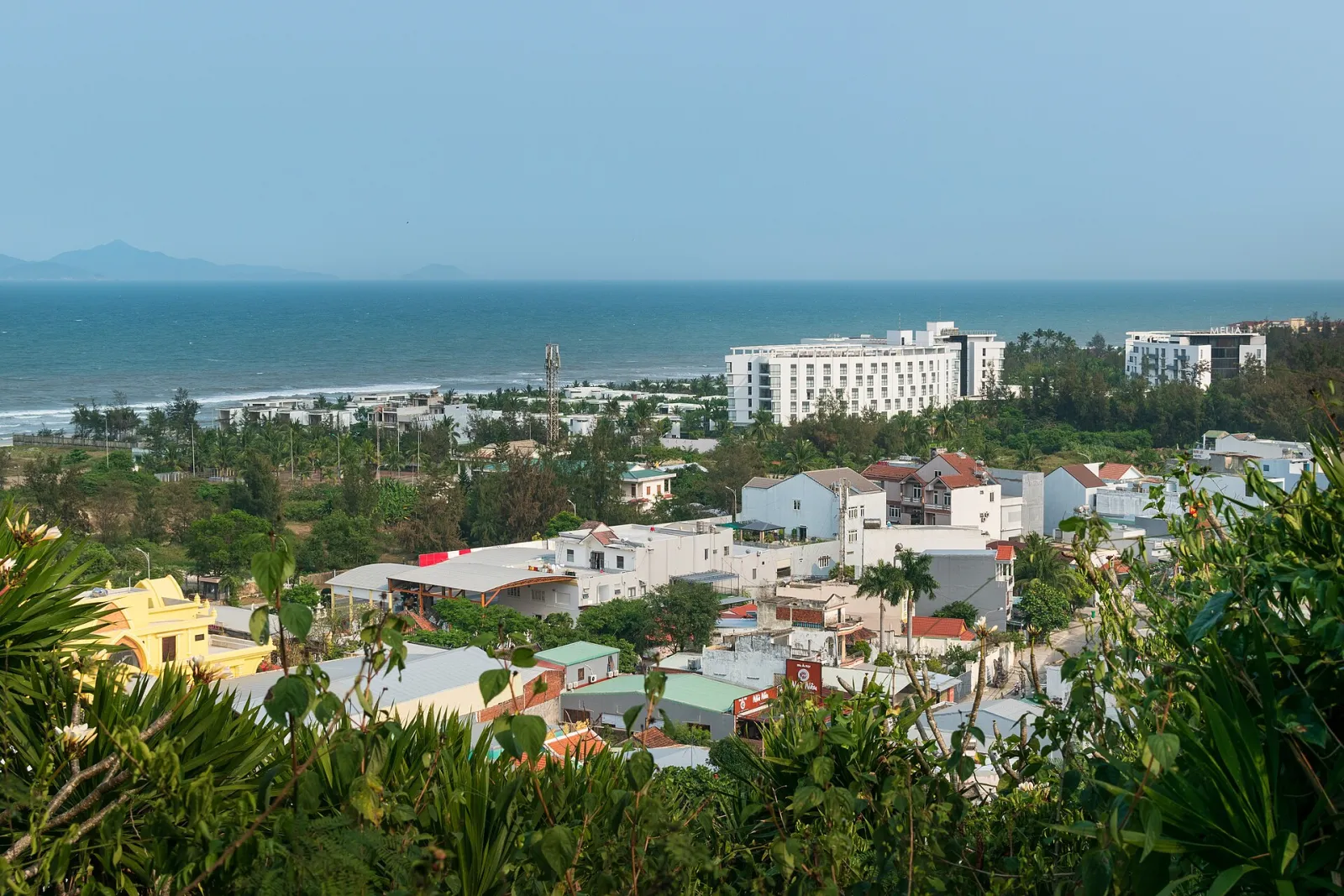
Vietnam's climate splits into three zones: the four-season north, the storm-prone central coast and the tropical south.
Answer
For a mixed north–south route, March–April and September–October are the most useful windows. For beaches, choose the central coast from April to August or the southern islands from November to April. For northern mountains and rice terraces, plan for mid-September to early October. Avoid the central coast in October–November unless you are prepared for storms.
On this page
Vietnam's three climate zones
Fifteen degrees of latitude and a mountain spine give Vietnam three very different climates. The Truong Son range acts as a weather wall, and elevation adds another layer: temperature drops about 0.6°C per 100 metres.
Month by month: what to expect
December to February: cooler north, busy holidays
Winter suits Hanoi, Ninh Binh and the central heritage towns, while mountain areas are misty and cold (Sa Pa's nights average 3–8°C). The south stays warm and dry.
March to May: the strongest shoulder season
March and April offer the best balance for a multi-region itinerary: dry, mild days in the north, warm seas on the central coast and the last of the dry season in the south.
June to August: green hills, heat and holiday crowds
Summer is hot and humid, and school holidays make beaches and domestic flights busy. The mountains are at their greenest, and early starts are a must for outdoor tours. July and August are the peak typhoon months in the Gulf of Tonkin.
September to November: harvest, heritage and changing rain
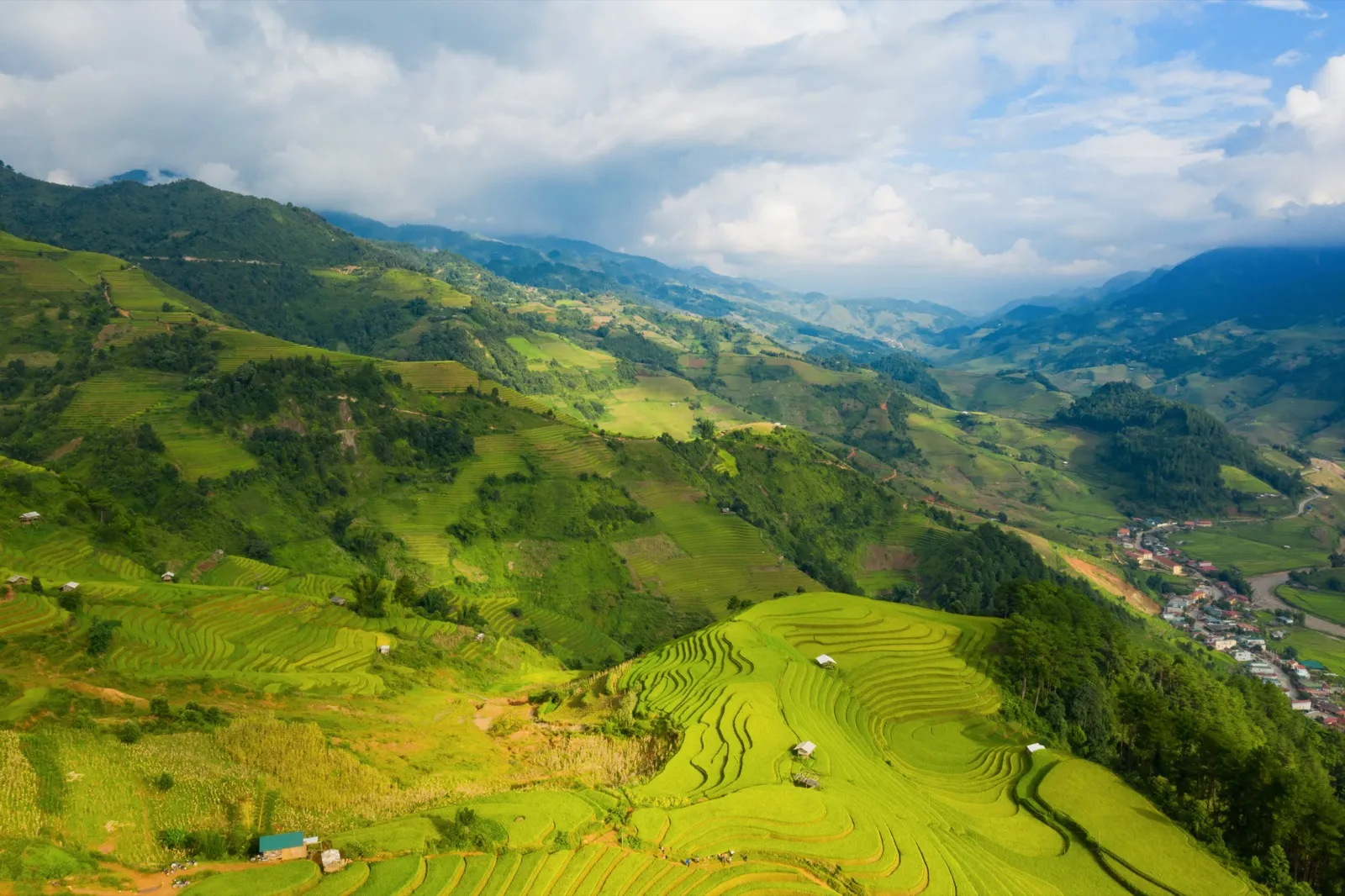
Autumn is a good time for Hanoi and the northern landscapes: the rice terraces of the northwest turn golden from mid-September to early October. The centre, however, enters its storm season, and Hue can get around 750 mm of rain in October alone.
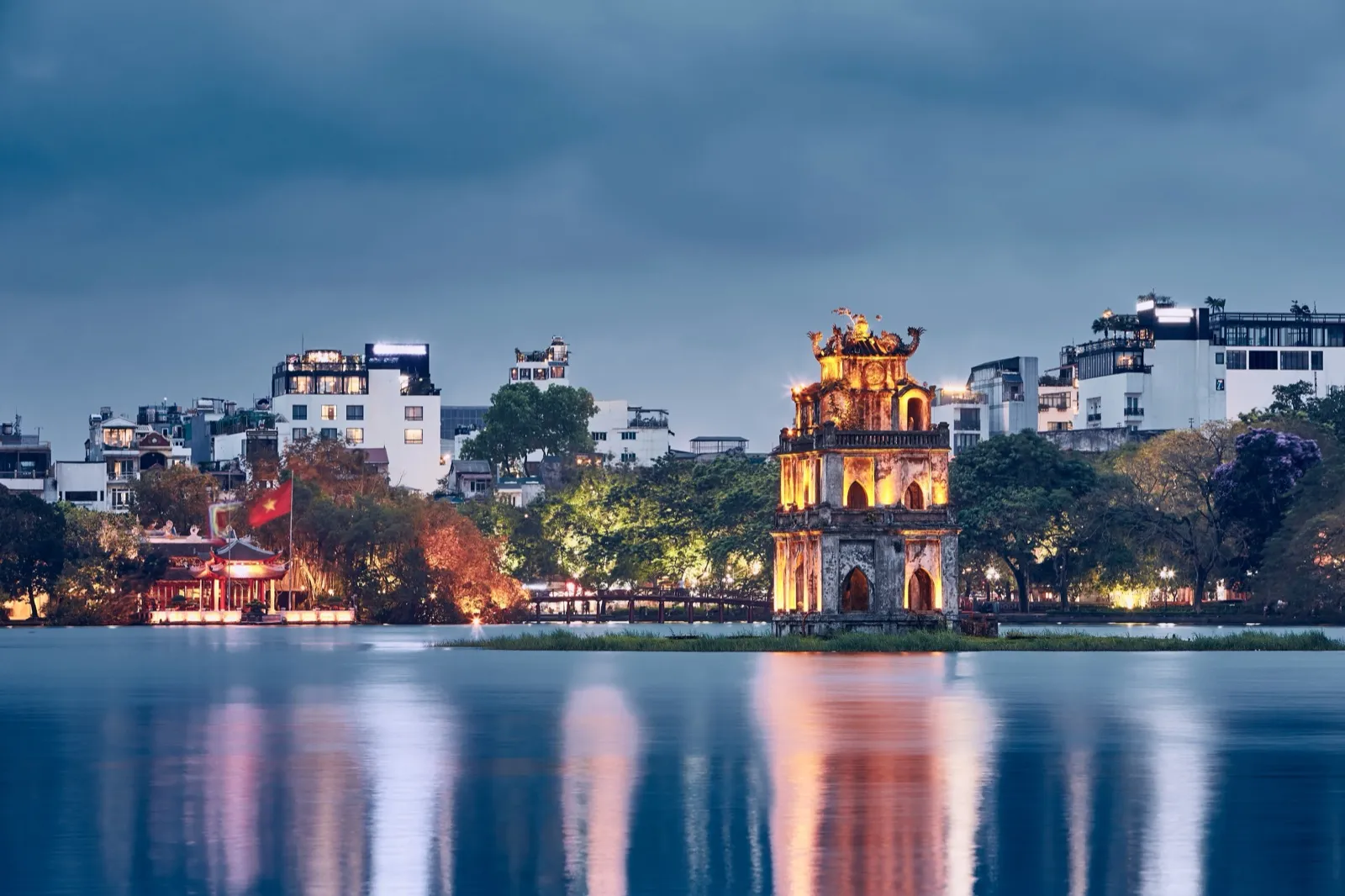
Northern Vietnam: Hanoi, Sa Pa, Ha Long, Ninh Binh
| Destination | Best months | Rainy peak | Temp range (°C) | Notes |
|---|---|---|---|---|
| Hanoi | Mar–Apr, Sep–Nov | Jun–Sep (up to 320 mm in Jul) | 16.4–29.0 | Cool, dry autumn; damp drizzle Feb–Apr. |
| Sa Pa | Mar–May, Sep–Nov | Jun–Aug (up to 420 mm in Jul) | 8.6–20.0 | Cold, misty Dec–Feb; frost below 0°C possible. |
| Ha Long | Mar–May, Sep–Nov | Jul–Aug (up to 300 mm) | 16.1–29.0 | Typhoon risk Jul–Aug; harbour closures possible. |
| Ninh Binh | Mar–Apr, Sep–Nov | Jun–Sep (up to 341 mm in Jul) | 18.5–29.8 | Boat trips best in dry, calm weather. |
Rice terrace season. The golden harvest runs from mid-September to early October. Prime viewpoints: Mu Cang Chai, the Muong Hoa valley around Sa Pa, Y Ty and Hoang Su Phi.
Flower seasons. Plum and peach blossoms cover Moc Chau, Sa Pa and Ha Giang from late January to February (overlapping Tet).
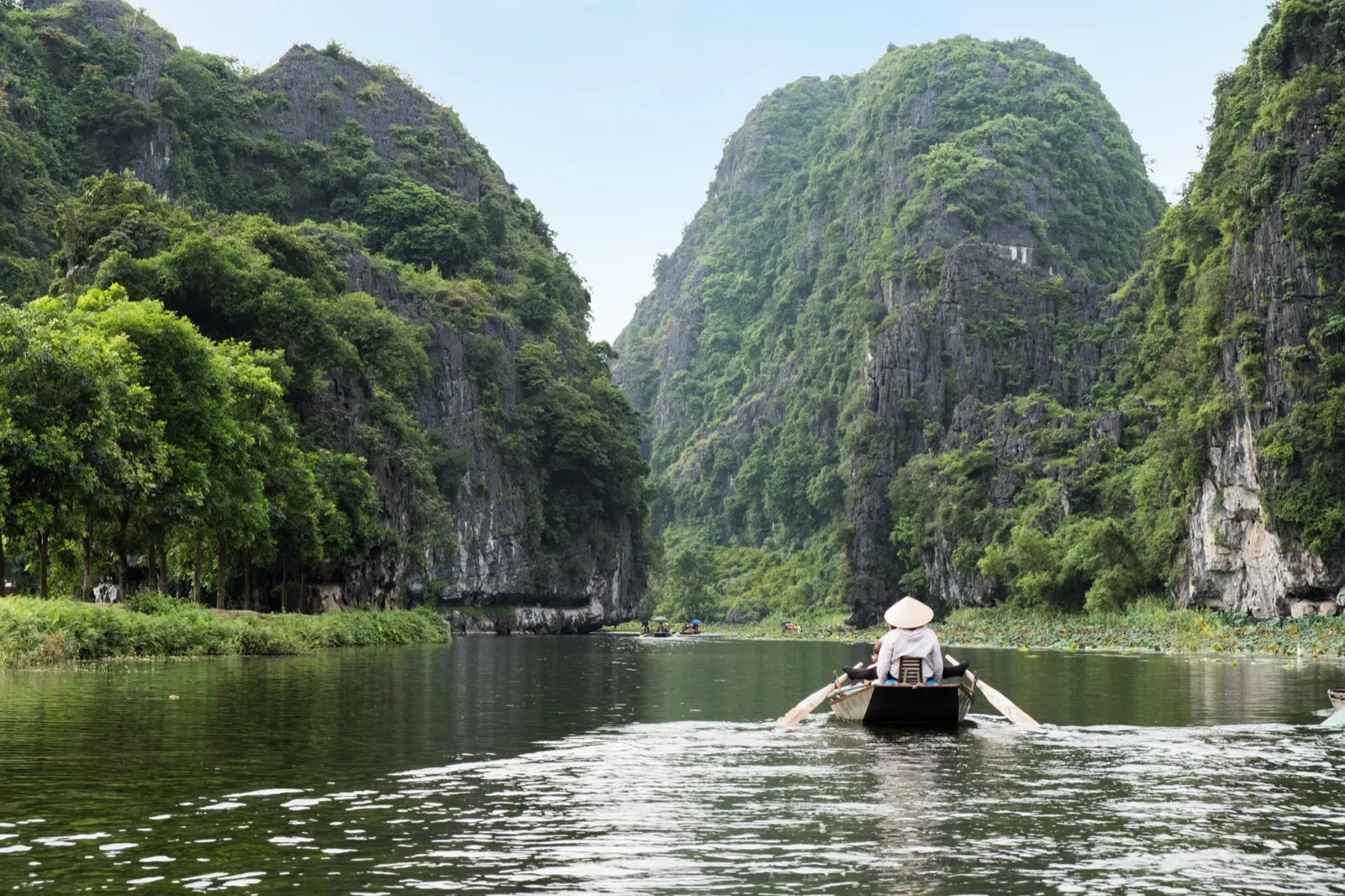
Central Vietnam: Hue, Da Nang, Hoi An, Nha Trang
| Destination | Best months | Rainy peak | Temp range (°C) | Notes |
|---|---|---|---|---|
| Hue | Feb–Apr | Oct–Nov (up to 750 mm in Oct) | 19.9–29.4 | Flooding risk on the Perfume River late in the year. |
| Da Nang | Apr–Aug | Oct–Nov (up to 613 mm in Oct) | 21.5–29.4 | Best beach and diving window Apr–Aug. |
| Hoi An | Feb–Aug | Oct–Nov (up to 650 mm in Oct) | 21.7–29.5 | Old town flooding possible Oct–Nov. |
| Nha Trang | Jan–Aug | Oct–Nov (up to 290 mm in Oct) | 24.0–28.8 | Driest coast in central Vietnam; good winter escape. |
Storm season. From September to December, tropical storms and the northeast monsoon hit the coast. October and November are the peak: heavy rain combines with high tides to flood Hoi An's old town and Hue's riverside districts.
Beach and diving season. The sea is at its best from March to August: warm water (27–30°C), calm swells and clear skies. Diving and snorkelling visibility peaks from April to August.
Southern Vietnam and the islands
| Destination | Best months | Rainy peak | Temp range (°C) | Notes |
|---|---|---|---|---|
| Ho Chi Minh City | Dec–Apr | Jun–Oct (up to 327 mm in Sep) | 26.0–29.2 | Short afternoon downpours in the wet season. |
| Mekong (Can Tho) | Dec–Apr | Sep–Oct (up to 311 mm) | 25.4–28.5 | Floating markets busiest in the dry season. |
| Phu Quoc | Nov–Apr | Jul–Sep (up to 440 mm in Aug) | 26.5–29.0 | West-coast beaches calmest Nov–Apr. |
| Con Dao | Mar–Sep | Sep–Oct (up to 335 mm) | 25.5–28.5 | Calm seas Mar–Sep; turtle nesting season. |
Phu Quoc. The island's best beach season runs from November to April, when the west and south beaches are flat and clear.
Con Dao. The seas are calmest from March to September, which is also when green sea turtles come ashore to nest.
Mekong flood season. From September to November, water from the upper Mekong spreads across the delta, reviving the Tra Su cajeput forest and the floating markets around Can Tho.
Best time by activity
| Activity | Ideal window | Top places | Why |
|---|---|---|---|
| Trekking | Sep–Nov, Mar–Apr | Sa Pa, Ha Giang, Bach Ma | Dry trails, cool air, low landslide risk. |
| Overnight cruises | Mar–May, Sep–Nov | Ha Long, Lan Ha, Bai Tu Long | Clear skies, calm seas, low typhoon risk. |
| Beach holidays | Apr–Aug (centre), Nov–Apr (south) | Da Nang, Nha Trang, Phu Quoc | Sunny, calm water, clear visibility. |
| Diving / snorkelling | Apr–Aug | Cu Lao Cham, Hon Mun, Con Dao | 15–20 m visibility, calm currents. |
| Rice terrace photography | 15 Sep – 5 Oct | Mu Cang Chai, Sa Pa, Y Ty | Golden harvest, clear autumn light. |
| Food and culture | Nov–Apr | Hanoi, Hue, Ho Chi Minh City | Mild weather, fewer rain interruptions. |
| Cycling and heritage | Feb–Apr | Hue, Hoi An, My Son | Gentle sun before the Lao wind arrives. |
Two hard rules: avoid trekking the northern mountains from June to August, when thunderstorms and flash floods are common, and never schedule a cruise or trek as the last activity before an international flight.
Festivals and peak dates
Festivals add atmosphere but change availability. Tet, Reunification Day, National Day and regional events can raise hotel prices by 50–200% and close small businesses.
| Year | Lunar New Year (Tet) | Official holiday window | Zodiac year |
|---|---|---|---|
| 2026 | 17 February | 14–22 February (9 days) | Year of the Horse |
| 2027 | 6 February | 4–10 February (7 days) | Year of the Goat |
| 2028 | 26 January | 24–30 January (7 days) | Year of the Monkey |
What Tet means for travellers: domestic flights, trains and resort hotels (Phu Quoc, Da Lat, Nha Trang) sell out one to two months ahead; most museums, temples, offices and local restaurants close from Tet Eve to the third day of the new year.
Other key events: the Da Nang International Fireworks Festival (DIFF) runs on Saturday nights from late May to mid-July, with hotel occupancy above 95% on show nights. Mid-Autumn Festival (15th day of the eighth lunar month, usually September) turns Hoi An and Hanoi's Old Quarter into lantern displays.
When Vietnam is busy (and when it is not)
Two separate peak cycles drive prices and crowds. International visitors arrive mainly from October to April, escaping winter at home, and fill the south and the islands. Domestic travellers peak from May to August, when school holidays send families to every beach from Ha Long to Nha Trang. The quietest windows are September–November on the central coast (storm season) and May–September on the southwest islands (rainy season).
Packing by season
Seasonal packing checklist
- North, winter (Nov–Feb): layer up with a thermal base, fleece, waterproof down jacket, scarf, gloves and a beanie.
- Centre and south, summer (May–Aug): light linen or cotton, SPF 50+ sunscreen, sunglasses, wide-brim hat, insect repellent.
- Centre, storm season (Sep–Nov): rubber-soled shoes, a two-piece rain suit, a dry-bag for documents and electronics.
- Any season: comfortable walking shoes, a light rain shell, a refillable water bottle and a small first-aid kit.
Managing weather risk
Weather is a planning input, not a guarantee. Follow official forecasts from the National Centre for Hydro-Meteorological Forecasting (nchmf.gov.vn) in the days before departure.
Book flexibly. Lock in the first and last nights, major flights and any limited-capacity cruise; keep one or two middle days adjustable.
Book early for peak dates. For Tet, DIFF, the rice harvest and school holidays, book flights and hotels 60–90 days ahead.
Sources and further reading
Official and primary references
Methodology: temperature, rainfall, rain-day and humidity figures are 30-year climate normals from NCHMF, Climate-Data.org and World Weather Online. Tet dates are converted from the official Vietnamese lunar calendar.
Build a weather-resilient itinerary
Put weather-sensitive activities early enough that you still have a replacement day. A cruise, mountain trek or long motorbike ride should not be the last thing before an international flight. Keep a city museum, cooking class, café route or spa morning ready for heavy rain, and make sure your hotel can help with transport at short notice.
Pack for the season you are actually visiting, not the season shown in a generic blog photo. Check rainfall and temperature for each region, then ask the local operator what the conditions feel like on the ground. A forecast is a planning tool; a guide who lives there can explain whether a shower is a ten-minute interruption or a reason to change a road route.
Flexibility is not a lack of preparation. It is preparation for the climate Vietnam really has.
Frequently asked questions
What is the best month for a Vietnam trip?
March and April are often useful for a mixed route, but the best month depends on your regions. Check north, centre and south conditions separately.
Is the rainy season a bad time to visit?
Not necessarily. Rain can be short and landscapes are lush, but outdoor activities need buffers and flexible cancellation terms.
When is Tet and why does it matter?
Tet follows the lunar calendar and usually falls between late January and February. It's a great time to see Vietnamese culture, but it brings high demand and changed opening hours.
How far ahead should I book peak-season travel?
Book flights, cruises and popular beach accommodation several months ahead for Tet, public holidays and school-holiday periods.
Tours featured in this story

Halong Bay Overnight Cruise 2 Days 1 Night: Kayaking, Sung Sot Cave & Ti Top Island

Sapa Luxury Eco-Resort Retreat 3 Days: Mountain Lodges & Soft Valley Trekking

Central Vietnam Heritage Trail 6 Days: Da Nang, Hue, Hoi An & Golden Bridge
Planning a Vietnam trip?
Share your dates, interests and pace. The Vibe Vietnam Tour editorial team can turn this guide into a practical private itinerary.
Plan my tripMore stories you may like
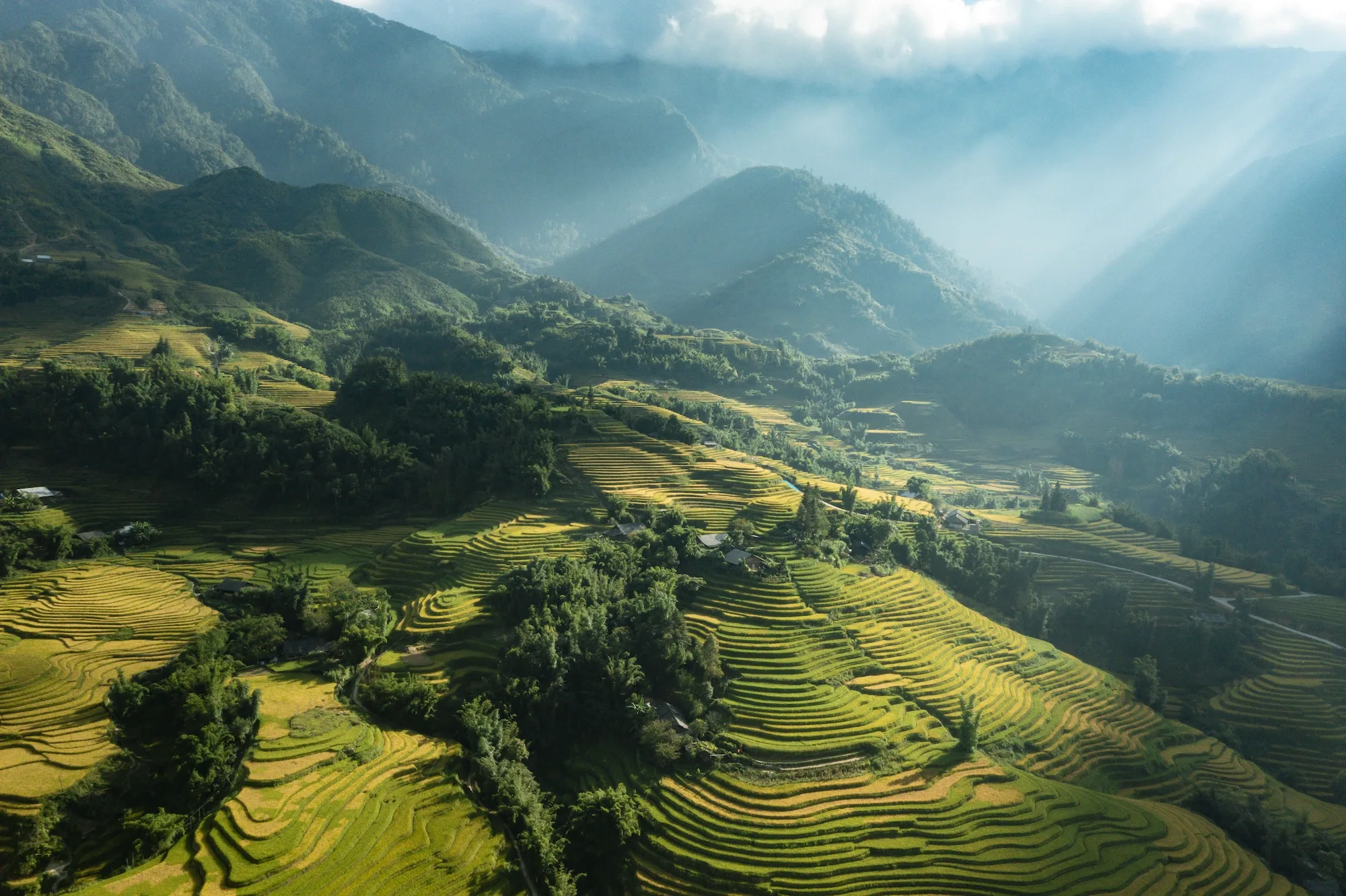
Sa Pa Trekking Checklist: What You Really Need to Pack
Sa Pa trekking checklist for 1–3 days: clothing, shoes, rain gear, homestay, safety, and village etiquette.
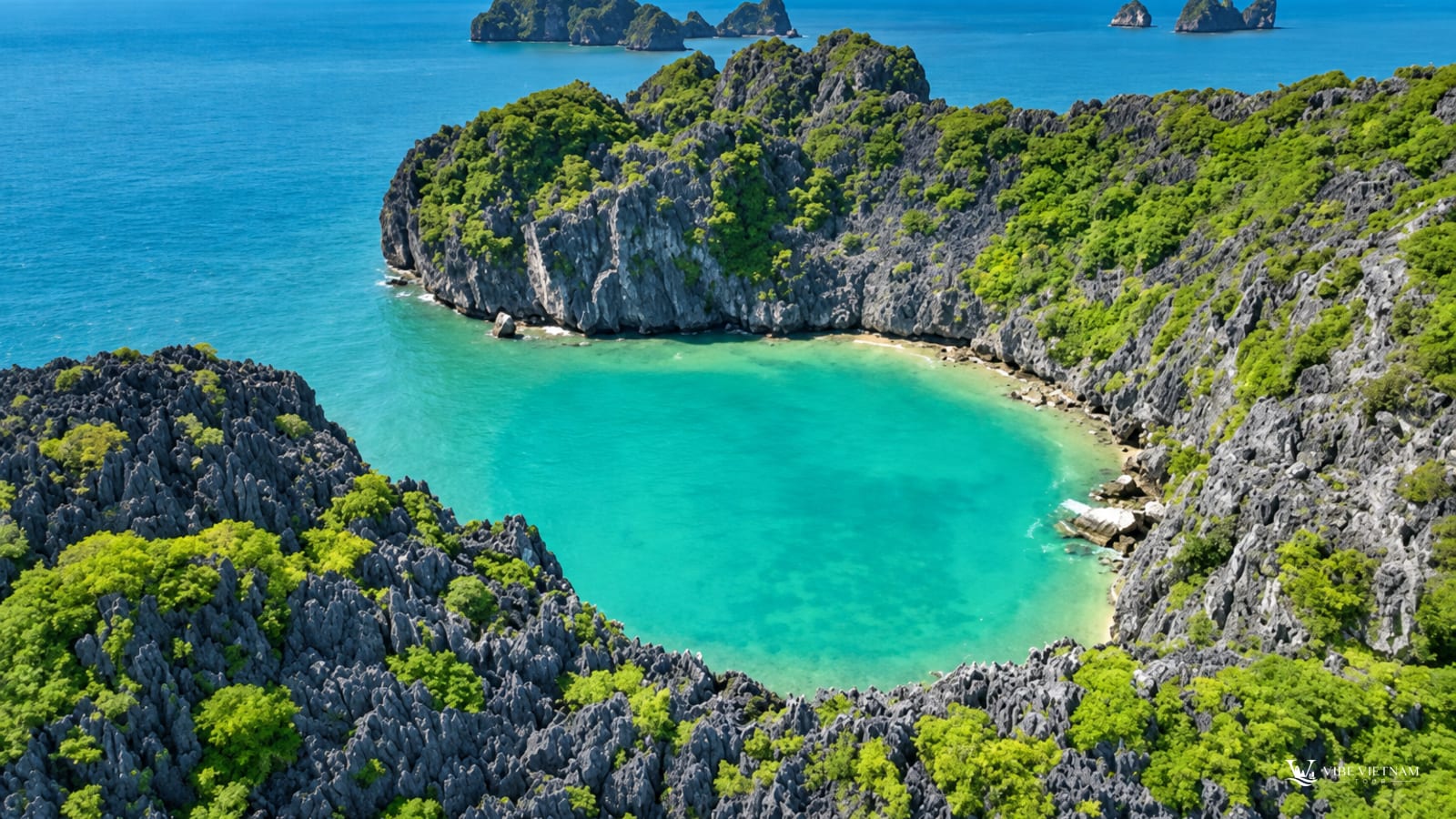
Phu Quoc with Kids: A Calm Family Travel Guide
Family-friendly Phu Quoc planning: where to stay, how to pace beaches and boat trips, safety, food, weather an...
Tam Coc Travel Guide: River, Rice Fields & Bich Dong
A practical guide to travelling in Ninh Binh involving Tam Coc: covering the river boat trip, Bich Dong, cycli...