Halong Bay 3 Days 2 Nights: An Honest Planning Guide
What a 3 day 2 night Halong cruise really includes: the middle-day boat transfer, 2026 entrance fees in USD and VND, vessel safety rules after the February fire, and what usually happens when the sea is closed.
Quick answer
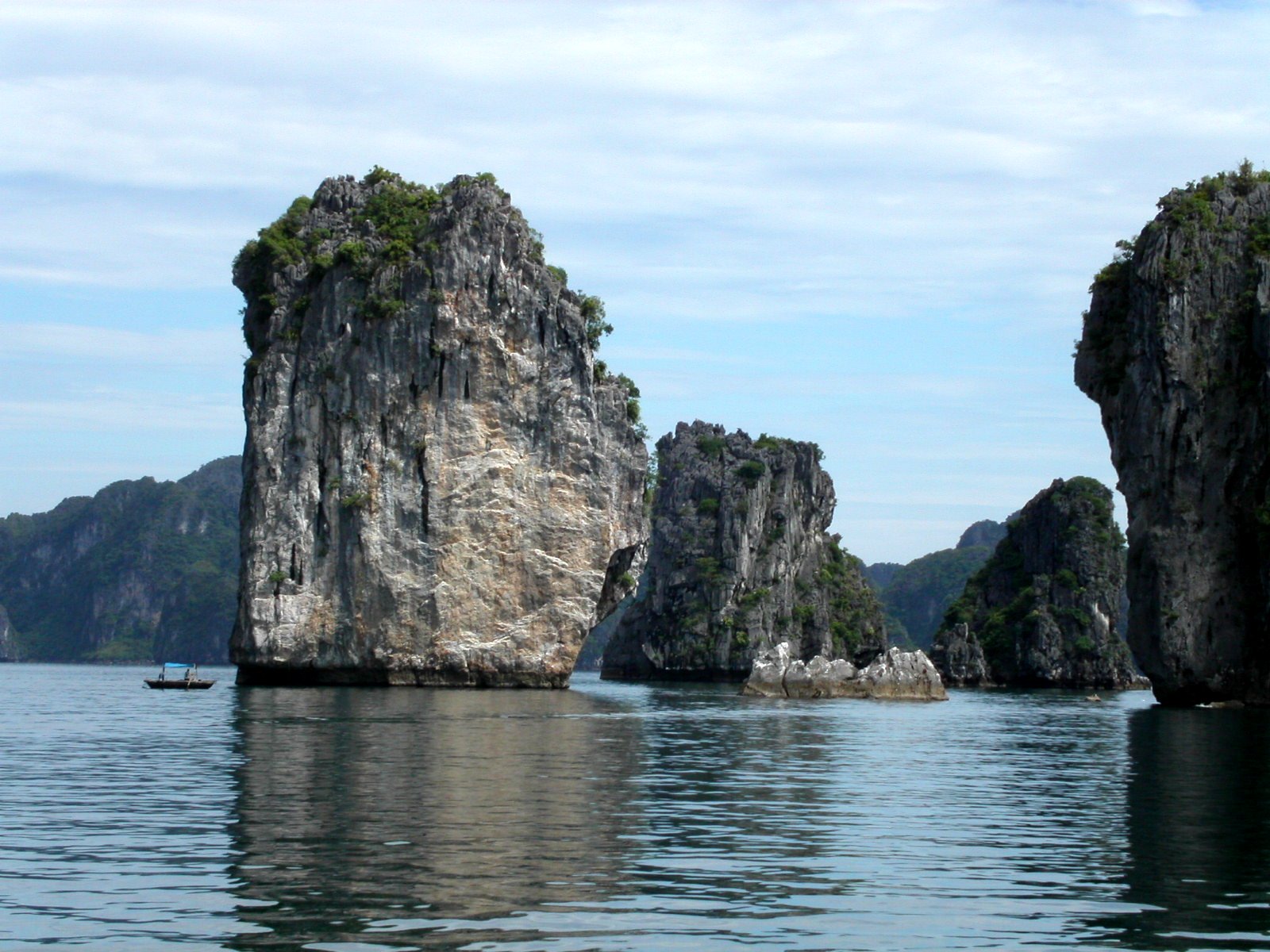
Three days and two nights buys you one thing the standard overnight trip cannot: a full middle day on a small day boat, in coves and tunnel caves the large vessels physically cannot enter. Choose the bay before you choose the boat. Ha Long Bay is best for the headline caves. Lan Ha and Cat Ba are better for swimming and kayaking, while Bai Tu Long offers more space. Budget roughly USD 160–365 per person for a mid-range to luxury cabin, plus an official entrance fee of about USD 23–30 that cheap quotes routinely leave out.
In this guide
- Three bodies of water, two provincial authorities
- Entrance fees and the costs quotes leave out
- The day boat: what 3D2N actually buys
- Two field-tested itinerary templates
- Cruise price ranges and what to ask before you book
- Vessel safety after 2026
- Seasons, storm risk and sea conditions
- Hanoi to the pier, the ferry, and the seaplane that no longer flies
- What to eat and how not to be overcharged
- Documents, visas, packing and health
- Sea bans: what usually happens and what to check
- Sources and further reading
Three bodies of water, two provincial authorities
English-language listings call this a "Halong cruise", but you are choosing between three seascapes governed by two administrations. Ha Long Bay and Bai Tu Long are administered by Quang Ninh province; Lan Ha Bay and the Cat Ba Archipelago by Hai Phong city.
That is not trivia. Each sets its own official entrance fees and runs its own management board, which is the main reason two operators selling an apparently identical itinerary quote different ticket costs. A Lan Ha cruise and a Ha Long cruise are different purchases.
Ha Long Bay and the Cat Ba Archipelago together form one UNESCO World Heritage site of 1,133 islands and islets. Bai Tu Long lies northeast, outside the World Heritage site, which is part of why it stays quiet.
Ha Long Bay (Quang Ninh)
Ha Long has the densest concentration of karsts and the best-known stops, including Sung Sot Cave, Ti Top Island, Luon Cave and Cua Van floating village. Piers and hotels around Bai Chay make it easy to add a night ashore. The trade-off is volume: roughly 500 licensed boats work this water, and the famous sites feel it in summer.
Lan Ha and Cat Ba (Hai Phong)
Sheltered coves, small beaches and calm channels, which is why activity-led operators base here. Viet Hai village, the Bright-Dark tunnel cave and Three Peaches beach set a less commercial rhythm. Entrance fees are substantially lower than Quang Ninh, and the fleet is smaller and newer.
Bai Tu Long (Quang Ninh)
Far fewer overnight boats and noticeably fewer crowds make Bai Tu Long a good choice if you have already visited Ha Long. The trade-off is a much smaller choice of boats, a different pier and a different stop list. Do not assume a Ha Long itinerary maps across. Ask for the pier and the stops in writing.

Entrance fees and the costs quotes leave out
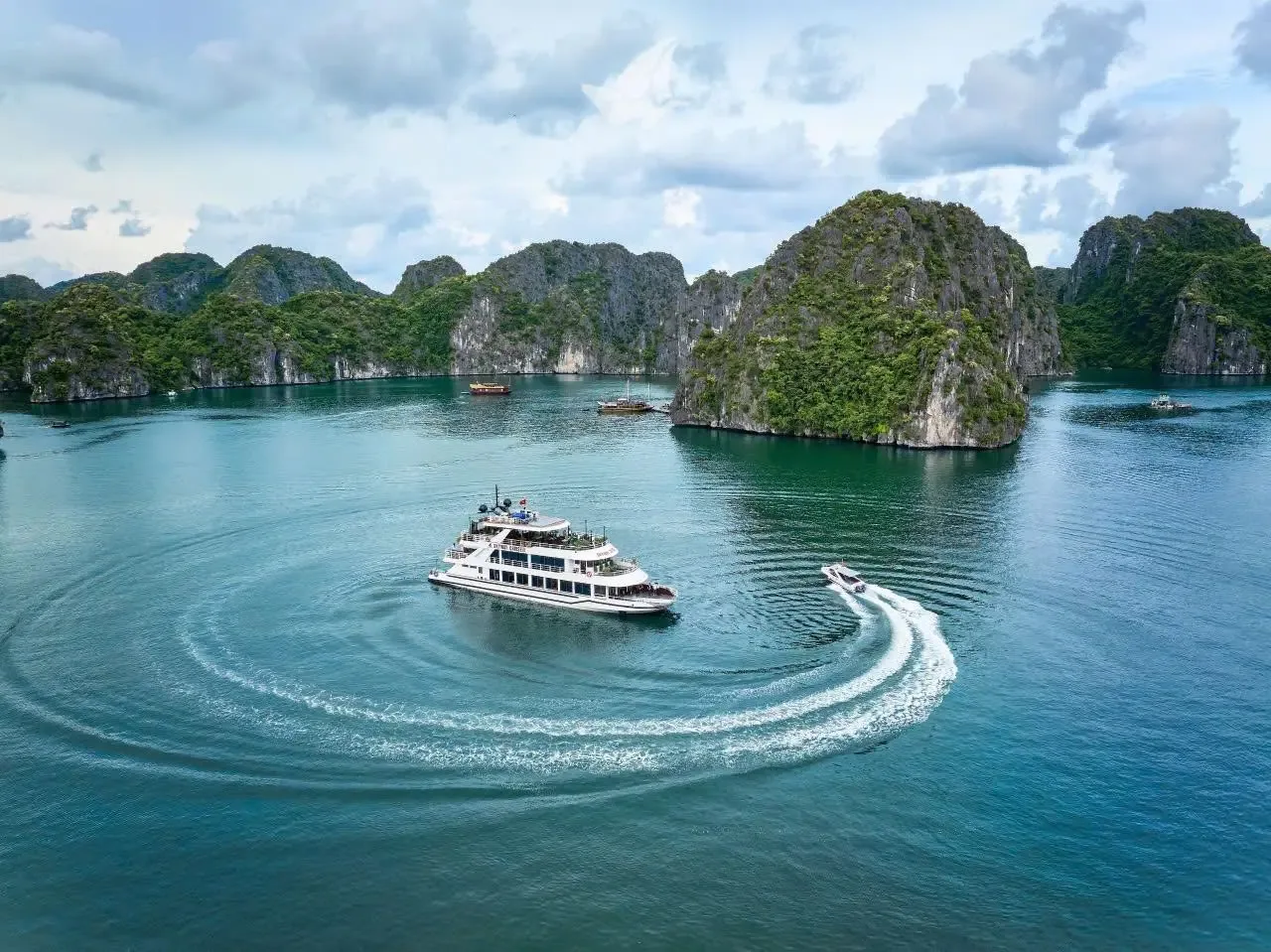
The bay entrance fee is set by the provincial authorities. It is an official charge, not an operator surcharge, and no operator can waive it. A 3D2N cruise requires the two-night tier, the most expensive band in either schedule, and that is where unusually cheap online quotes hide their shortfall.
| Water | Day visit | 1 night | 2 nights (what 3D2N needs) |
|---|---|---|---|
| Ha Long Bay (Quang Ninh) | 260,000 – 310,000 VND by route (USD 10–12) | approx. 500,000 – 590,000 VND (USD 19–23) | approx. 650,000 – 790,000 VND (USD 25–30) |
| Lan Ha and Cat Ba (Hai Phong) | 120,000 VND adult (USD 4.60); ages 6+ pay half | 400,000 VND (USD 15) | 600,000 VND (USD 23) |
The Quang Ninh figures follow Resolution 51/2025/NQ-HDND of 26 February 2025, which also opened three separately priced routes from 1 May 2025: VHL6 at 150,000 VND per person per day, VHL7 (combining VHL1–VHL4) at 600,000 VND, and VHL8 linking Tuan Chau Marina, Ha Long International Cruise Port and Nam Cau Trang at 70,000 VND. The Hai Phong figures follow Resolution 47/2025/NQ-HDND of 10 December 2025, effective 1 January 2026. Under-6s go free; several categories including students and Vietnamese citizens aged 60 and over pay half. These fees cover bay access only, not the boat and not transport.
Four questions that stop a quote inflating later
- "Does the price include the two-night entrance fee?" If the answer wanders, add USD 23–31 per person to your budget.
- "Is there a separate environmental or berthing fee?" Berthing charges at Tuan Chau and Ha Long International Cruise Port rose on 1 April 2026. Operators usually absorb them but occasionally itemise. An environmental fee of USD 5–7 is sometimes billed separately.
- "How long is the included kayaking?" Typically 30–40 minutes; extra rental runs USD 5–10.
- "Are drinks billed on departure, or is there a package?" Beer USD 3–5, cocktails USD 8–12, wine USD 25–60 a bottle. A package at USD 25–45 a day pays off from about two drinks daily. Check-in cabin upgrades run USD 30–100; an hour's massage USD 25–60.
Tipping. Western travellers get contradictory advice, so here is the norm rather than a rule. Tipping is customary but not obligatory. The usual amounts are USD 3–5 per guest per day into the crew pot and USD 5–10 for the guide, handed over at the end. Service charges are not automatically added on most vessels, and it is reasonable to adjust a tip after poor service.
The day boat: what 3D2N actually buys
First, a naming convention that catches out almost every first-time visitor. Vietnamese tour titles count calendar days, not 24-hour periods. Day one starts with a midday boarding, day two is the only full day, and day three ends alongside at around 11:30. You are buying roughly 47 hours, not 72. Travellers reliably feel short-changed here, and it is almost always because nobody explained the convention.
Second, the mechanism that makes the trip worth it. Large overnight vessels must hold an approved anchorage, and must hand cabins back to departing one-night guests and receive the next group around midday. They are also too big for narrow inlets, tunnel caves and shallow coves. So on the middle morning, two-night guests transfer to a smaller purpose-built day boat and rejoin the mothership in the late afternoon. This is standard practice, not a service cut.
| Time | What happens | What to do |
|---|---|---|
| 06:30 – 08:30 | Deck exercise, breakfast, transfer off the mothership | Leave the main bag in the cabin; carry water, hat, sunscreen, grippy shoes, dry bag |
| 09:00 – 15:00 | Deeper coves, a village pier, beaches or tunnel caves; lunch aboard the day boat | Kayak and swim when permitted; note the area limits and the meeting time |
| 15:30 – 17:00 | Back to the mothership, into your old cabin or a new one | Confirm beforehand whether you keep the same cabin, and who moves the luggage if not |
| 18:00 onward | Dinner, squid fishing, cooking class or deck time | Turn in early; cabins are usually released before 09:00 the next morning |
Ask three things about the day boat before you pay: does it have shaded seating and its own toilet, what is the maximum passenger count, and what replaces it if weather cancels the transfer. Families with small children and anyone prone to seasickness should push for a small, capped day boat rather than one filled from several cruises.

Two field-tested itinerary templates
Template A: both nights aboard
For maximum time on the water, if you hate repacking and are content with the ship's menu for two days.
| Day | Typical shape | What to watch |
|---|---|---|
| Day 1 | Leave Hanoi around 08:00, pier by 11:00–11:30; tender out, lunch under way; afternoon kayak or swim; squid fishing and dinner on deck | Everyone boards at midday, so the pier is chaotic. Confirm vessel name, registration number and berth in advance |
| Day 2 | Day boat from 08:30–09:00 into Lan Ha or Cat Ba: Viet Hai village, Three Peaches beach, a tunnel cave; back mid-afternoon for a cooking class and barbecue dinner | The most transfer-heavy and tiring day. Non-slip sandals, a light jacket, seasickness tablets if needed |
| Day 3 | Sunrise, light breakfast, a final cave or viewpoint; cabins released before 09:00, brunch aboard, alongside around 11:30; Hanoi by early afternoon | Do not book a flight before 19:00 that day. For a long-haul departure, sleep in Hanoi that night |
Template B: one night aboard, one night on Cat Ba or ashore
For a tighter budget, children who tire of a confined boat, or a wider choice of food and a full-size bathroom for one night.
| Day | Night ashore in Ha Long City | Night on Cat Ba Island |
|---|---|---|
| Day 1 | Overnight cruise on the Ha Long route: Sung Sot, Ti Top, Luon Cave; sleep aboard | The same, but pick a route finishing near Gia Luan so the crossing is short next morning |
| Day 2 | Alongside at midday, check into Bai Chay; Queen Cable Car in the afternoon; street food around Hon Gai in the evening | Tuan Chau – Gia Luan ferry or the Cat Hai – Cat Ba cable car; Trung Trang Cave and the Ngu Lam viewpoint; seafood at Cai Beo |
| Day 3 | Slow morning, squid cake from Ha Long I market, lunch, road back to Hanoi | Early swim at Cat Co 1 or 2, check out, ferry or road back to the mainland |
Template B always breaks at the hand-offs: who drives you from the pier to the hotel, where the large suitcase sits while you are aboard, and what time the vehicle leaves for Hanoi on the last day. Get all three in writing before you send a deposit.
Cruise price ranges and what to ask before you book
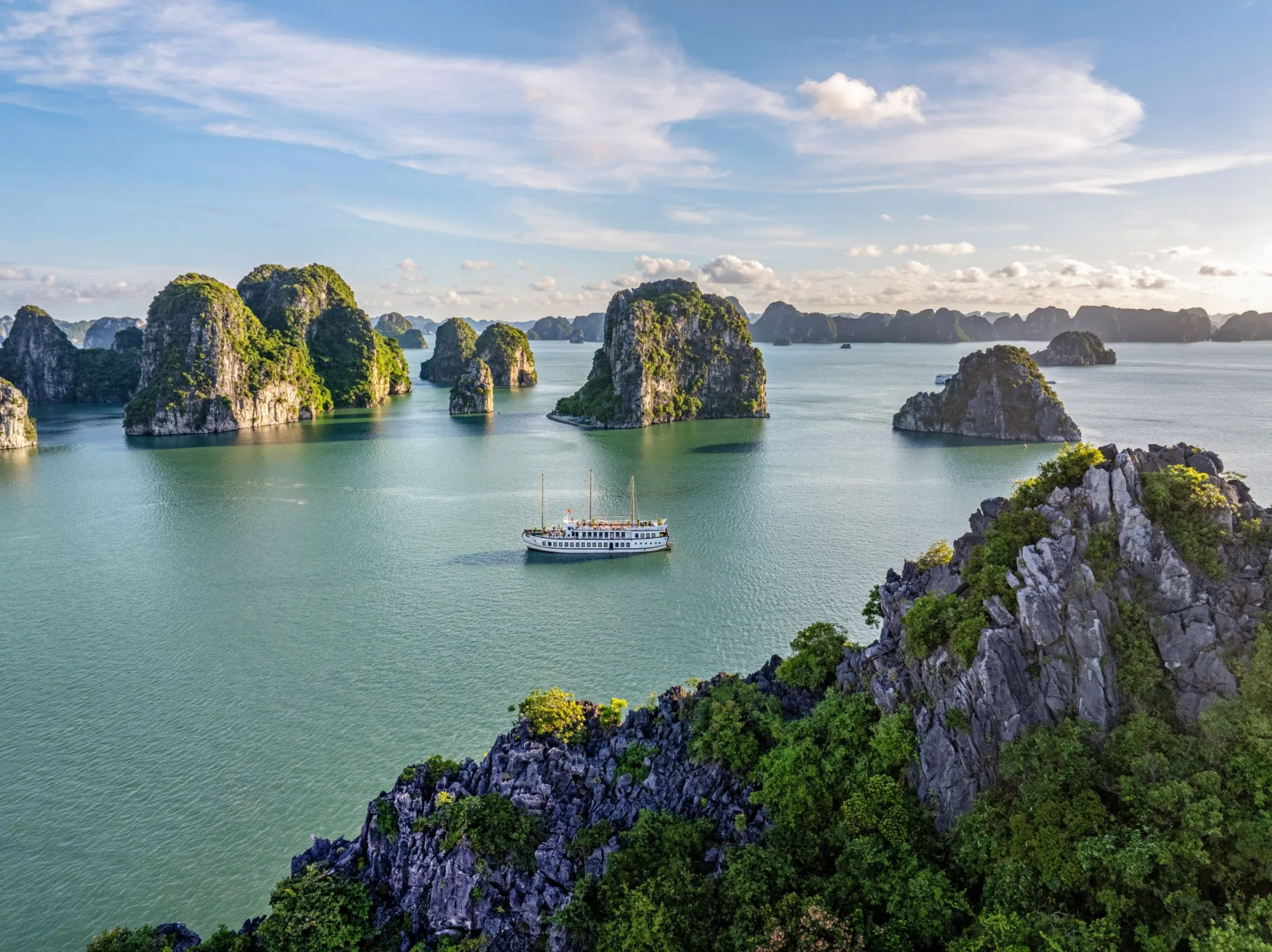
Pricing moves with date, cabin grade, occupancy and inclusions. These bands are market estimates at the date of review. They're useful for positioning, not a substitute for a dated quote with written inclusions and exclusions.
| Band | Indicative per person | Choose it when | Ask before you deposit |
|---|---|---|---|
| Standard | 2,800,000 – 3,800,000 VND (USD 107–146) | Cost leads, but you want a private cabin and the full route | Real glass window or a vent? Fixed set menu or a choice? |
| Mid-range | 4,200,000 – 5,800,000 VND (USD 161–222) | You want a roomier cabin, dependable food, a larger crew | Is lunch buffet or set? Does the day boat have shade and a toilet? |
| Luxury | 6,500,000 – 9,500,000 VND (USD 249–364) | You care about a private balcony, a pool and a stronger dining experience | Do all grades have balconies, or only some? Are entrance fees included? |
| Ultra-luxury | 10,500,000 – 16,000,000 VND and above (USD 402–613+) | Contemporary design, privacy and close attention | Crew-to-cabin ratio? Contingency if the day boat cannot sail? |
The water narrows the shortlist faster than the budget does. The traditional Ha Long route carries the most boats and the fiercest price competition. Bai Tu Long has far fewer overnight vessels and holds its prices. Lan Ha has the smallest fleet, with many newer steel-hulled boats built around activity. Compare within one body of water only.
Vessel safety after 2026
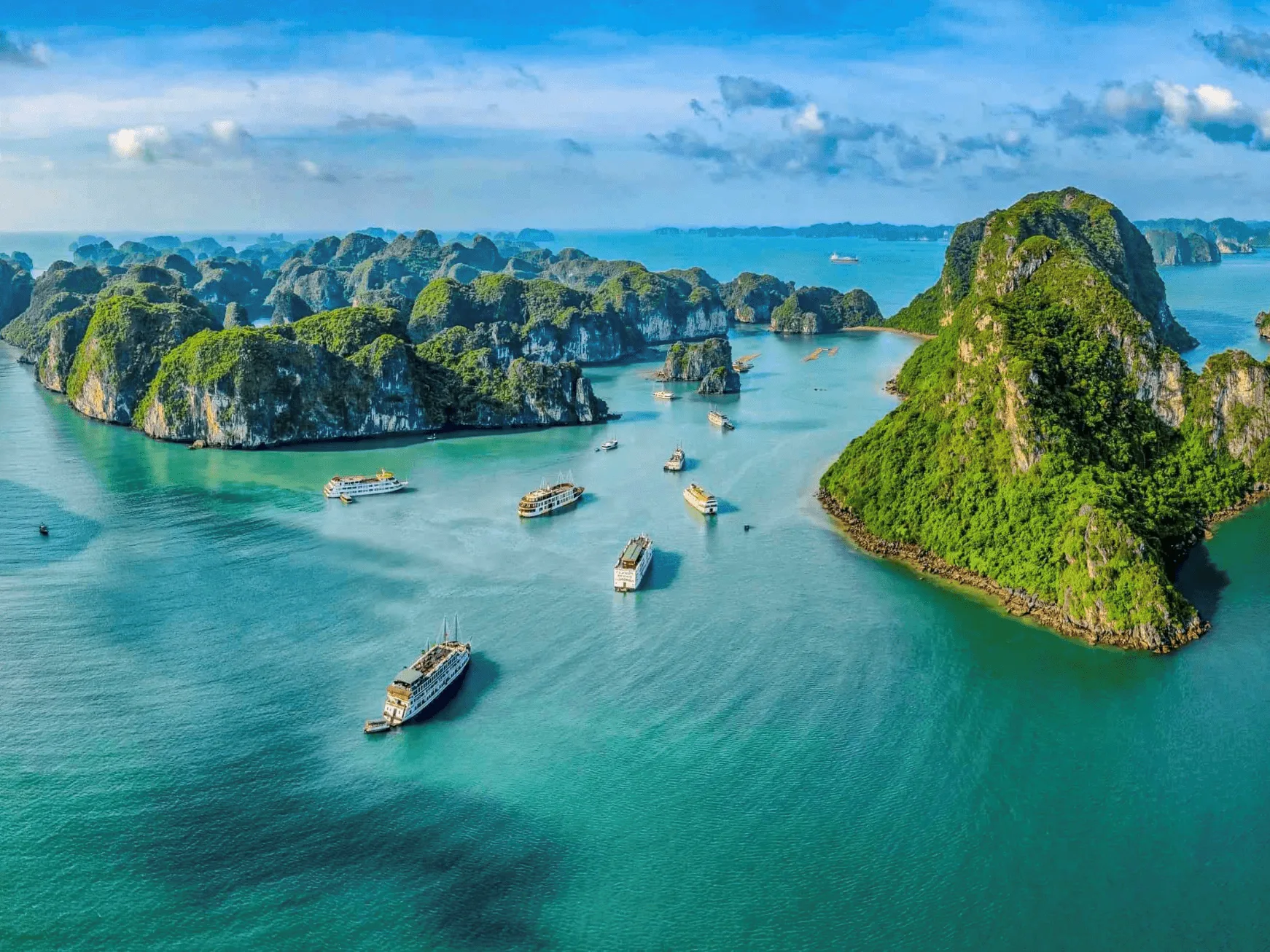
Most English-language guides skip this; in 2026 it became a real selection criterion. On 27 February 2026 a fire broke out aboard the overnight vessel Signature Royal (registration QN-7269) in Ha Long Bay. On 3 March 2026 the Quang Ninh Department of Construction issued document 724/SXD-QLVTPT&NL ordering a comprehensive review of the whole tourist fleet on Ha Long and Bai Tu Long. The passenger-relevant parts: owners must verify all technical-safety and environmental conditions before operating; electrical and fuel systems concealed inside bulkheads on wooden-hulled vessels get particular scrutiny; unauthorised structural modification is prohibited; and a boat may only leave port once safety conditions, crew certificates and passenger numbers within the boat's licensed capacity are verified.
Circular 20/2026/TT-BXD, issued 15 May 2026 and in force from 1 July 2026, additionally requires vessels entering and leaving inland waterway ports to declare their plan and submit to Port Authority inspection in three forms: routine, unscheduled and planned. Risk is assessed partly on vessel age, safety inspection history and administrative violation history.
Five checks you can make yourself
- Ask for the registration number (QN-xxxx or HP-xxxx), build year and last refit. A transparent operator answers immediately.
- Ask whether the hull is wooden or steel. Steel is not automatically safer, but an older wooden boat warrants harder questions about its wiring.
- Ask for the maximum licensed passenger capacity and the actual guest count on your night. Treat any sign of overloading as a serious red flag, and do not board until the operator has resolved it.
- Attend the full safety briefing. Locate the life jackets in your cabin and the two nearest exits, counting doorways so you can navigate in darkness.
- Charge devices in a supervised common area. Never leave a power bank charging overnight in the cabin while you sleep.
Seasons, storm risk and sea conditions
The bay sits inside the northern Vietnamese monsoon and typhoon system. This is a multi-year pattern, not a forecast.
| Period | Usual conditions | Suits |
|---|---|---|
| March – April | Cool 18–24°C, relatively calm sea, morning mist and flat white skies | Mild-weather travellers; poor for blue-sky photography |
| May – August | Best sun, warmest and clearest water for swimming, but also peak storm and tropical-depression season | Swimmers and kayakers who can absorb a schedule change; book flexible terms |
| September – November | Many good weather windows, heavy rain tapering off; early September can still bring storms | The best overall balance of the year |
| December – February | Cold 12–18°C, heavy mist on some days, little beach swimming | Travellers who dislike heat; pack layers, as sea wind bites harder than inland cold |
One misconception worth correcting: a storm passing and the sun returning does not mean the sea is safe. Currents stay strong, runoff clouds the water and underwater visibility remains poor for days. If the captain says swimming is off, that is professional judgement, not excessive caution.
Hanoi to the pier, the ferry, and the seaplane that no longer flies
The expressway has cut Hanoi to Ha Long to roughly 150–160 km, usually 2h15 to 2h40. Boarding time is fixed and weekend traffic is not, so take the operator's stated arrival time and add at least 30 minutes.
| Option | Time | Indicative price | Suits |
|---|---|---|---|
| Shared limousine, hotel pickup | 2h15 – 2h40 | 240,000 – 340,000 VND each way (USD 9–13) | Couples, solo travellers, small groups in the Old Quarter |
| Private car with driver | 2h00 – 2h15 | 1,800,000 – 2,500,000 VND per vehicle each way (USD 69–96) | Families and anyone who needs to control the clock |
| Express coach | 2h30 – 3h | 120,000 – 160,000 VND each way (USD 4.60–6) | Independent travellers with light luggage |
| Tuan Chau – Gia Luan ferry | 45 – 50 min, plus 25 km (30–40 min) into Cat Ba town | Foot passenger 80,000 VND (USD 3); motorbike 100,000 VND; car under 9 seats 480,000 VND (USD 18) | Template B, and bay views on a budget |
High-season ferry departures (16 April – 30 September) are usually 07:30, 09:00, 11:30, 13:30 and 15:00, returning 09:00, 11:30, 13:00, 15:00 and 16:00. Low season drops to three each way. The pier adjusts for weather, so call on the day.
Outdated information alert: Hai Au Aviation announced on 6 March 2026 that its Ha Long seaplane sightseeing service ceased permanently from 1 April 2026. A great deal of English-language content still sells the 25-minute scenic flight. Helicopter sightseeing over the bay stopped in 2023. The remaining elevated viewpoints are the climb up Ti Top Island and the Queen Cable Car at Bai Chay. The discontinued service is a useful reminder that fees, rules and services can move faster than travel blogs do. Check the date on anything you read, including this page.
Two piers matter. Ha Long International Cruise Port near Bai Chay handles most Ha Long and Bai Tu Long routes and larger groups. Tuan Chau International Marina, about 12.5 km west of Bai Chay, is the hub for transfer boats to Lan Ha and for the Cat Ba ferry. Match your hotel to the pier named on your itinerary before booking a car.
What to eat and how not to be overcharged
Meals aboard revolve around steamed seafood, hot soup, seasonal greens and a barbecue night. Good, but similar from boat to boat. The interesting eating is ashore, especially in Hon Gai around Ha Long I market, where locals outnumber visitors. Bai Chay is convenient to the hotels and priced accordingly. Doan Thi Diem and Tran Phu streets concentrate the squid-cake and rice-roll shops.
| Dish | How to recognise it | How to order it well |
|---|---|---|
| Cha muc gia tay (hand-pounded squid cake) | Pounded in a stone mortar, so the surface is pitted and the bite springy, not mushy | Eat hot with sticky rice or steamed rice rolls; vacuum-frozen packs travel home well |
| Bun be be (mantis shrimp noodle soup) | Clear sweet broth with fish cake, fried tofu and fresh herbs | Good shops shell the shrimp for you; order extra claws for a bolder bowl |
| Bun cu ky (crab-claw noodle soup) | Whole crab claws with golden roe on top | Eat hot with calamansi and fresh chilli. Not a dish for a rushed lunch |
| Ngan (thick-shelled local clam) | A dark, heavy bivalve with rich meat | Best as congee or stir-fried with noodles; go to a specialist, as it smells strongly fishy when badly cooked |
| Sa sung (peanut worm) | Usually dried, then roasted, or used to sweeten broth | A small starter portion is plenty; sold by weight and expensive, so ask the price first |
For fresh seafood the rule is simple and it works: ask the price per kilogram, watch the weighing, and photograph the price board before you agree to have anything cooked. That single habit is the best defence against the inflated bill a handful of visitors report every year.
Documents, visas, packing and health
Sleeping on the bay counts as accommodation, so passengers must be declared. Operators want a clear photo of your passport and valid visa 24–48 hours ahead, and the original at the pier. A phone photo will not clear the security check.
Visa exemption. Vietnam's 45-day unilateral exemption under Resolution 44/NQ-CP covers, among others, the United Kingdom, France, Germany, Italy, Spain, Denmark, Norway, Sweden, Finland, Russia, Belarus, Japan and South Korea. Those passport holders need no visa for a trip of this length. United States, Canadian, Australian, New Zealand and Irish passports are not on that list.
E-visa. Open to citizens of every country, valid up to 90 days, at USD 25 single entry or USD 50 multiple entry. Three things catch travellers out. Apply only at evisa.gov.vn: paid look-alike sites charge several times the fee for the same application. You must enter through the checkpoint you declared on the form; the e-visa has been valid at 83 checkpoints since December 2025, but yours is tied to the one you named, so fix your arrival airport before applying. And there is no in-country extension: to stay longer you must exit and reapply. Official processing is 3–5 working days, so apply 2–4 weeks ahead and avoid non-refundable flights until it is issued.
Packing for two nights on the bay
- Two or three breathable outfits, swimwear and a light jacket. The night wind offshore is colder than on the mainland, even in summer
- Non-slip sandals with a heel strap for wet decks, plus shoes with real grip for the climb up Ti Top and for cave floors
- Reef-safe sunscreen, motion-sickness tablets (taken about 30 minutes before sailing) and a dry bag for your phone
- A refillable bottle, a power bank, and 500,000–1,000,000 VND (USD 19–38) in small notes, since signal and card payment on the bay are unreliable
- Original passport, offline copies of your booking and the operator's emergency number saved on your phone
- Soft luggage rather than a hard shell; ship staircases are narrow. Leave the big case at your Hanoi hotel
Health and insurance: This is general information, not medical advice. If you are pregnant, have a cardiac condition, inner-ear or balance problems, limited mobility, or take regular medication, speak to your doctor before travelling and tell your guide when you board. There is no medical facility on the bay. Evacuating a casualty to shore takes hours, longer in bad weather. Carry travel insurance that explicitly covers boat travel, kayaking and swimming, and medical evacuation, and check it does not exclude trips disrupted by a government transport suspension.
Sea bans: what usually happens and what to check
The Inland Waterway Port Authority can order sightseeing and overnight vessels to stay in port. Operators must comply. For example, document 266/CVDTND-ATQLKCHT of 21 August 2026 suspended departures from 07:00 on 22 August 2026 until a final storm bulletin was issued. These notices do not usually state an end time, so allow some flexibility in your plan.
| Scenario | Usual outcome | How to protect yourself |
|---|---|---|
| Ban before departure | Terms vary by operator; unused cabin and entrance fees are commonly refunded or converted to a 6–12 month voucher | Get written, time-stamped confirmation; ask the voucher's expiry date and conditions |
| Ban during the trip | Terms vary by operator; many settle the cost according to the nights actually used | Record when you were notified, photograph the posted notice, check the contract before signing a settlement |
| One stop substituted | The boat switches to a nearer stop or stays in sheltered water | Ask why, and whether the substitute is comparable. If a separately priced activity was dropped, ask for that portion back |
| Road transfer already run | The completed road leg is usually chargeable under the transport contract | Ask how this is calculated before you book, not on the day |
Editorial judgement, stated plainly: for a June-to-September departure, the cancellation terms matter as much as the price. A boat that is USD 19 cheaper but refunds only half may be worse value than one that offers a full refund. Build one buffer day into the wider Vietnam itinerary so a postponed cruise does not collapse the rest of the trip.
Safety note: All weather and maritime information here is guidance only. The decision to sail or suspend rests with the Inland Waterway Port Authority, the captain and the competent authority at the time.
Sources and further reading
Primary and practical references
- UNESCO World Heritage Centre — Ha Long Bay and Cat Ba Archipelago: scope of the World Heritage site and the 1,133 islands figure.
- Ha Long Bay Management Board: fee schedule under Resolution 51/2025/NQ-HDND and departure-suspension notices.
- Cat Ba Archipelago Bays Management Board: day and overnight fees effective 1 January 2026 under Resolution 47/2025/NQ-HDND.
- VietnamPlus — safety tightened after the Ha Long tourist-boat fire: document 724/SXD-QLVTPT&NL of 3 March 2026.
- Hai Au Aviation closure announcement and TTR Weekly — Halong Bay's flights call it a day: seaplane service ended 1 April 2026.
- Vietnam National E-Visa Portal: the only official application site; fees, validity and eligible checkpoints.
- National Centre for Hydro-Meteorological Forecasting: storm warnings and date-specific forecasts before you sail.
Written and reviewed on 11 September 2026 by the northern Vietnam operations team at Vibe Vietnam Tour, who run these departures. Conversions use 1 USD ≈ 26,100 VND. Cruise prices are market estimates at the date of review; entrance fees, berthing charges, ferry timetables, vessel-safety requirements, visa rules and cancellation policies are set by government bodies and individual operators and change with little notice. Reconfirm the entrance-fee tier, the ferry schedule, your e-visa entry checkpoint and the written cancellation terms for your own departure date.
Frequently asked questions
How much is the Halong Bay entrance fee for a two-night cruise?
A three-day, two-night cruise needs the two-night tier, which is the most expensive band. On Ha Long Bay in Quang Ninh province it is roughly 650,000 to 790,000 VND per person, about USD 25 to 30 at 26,100 VND to the dollar. On the Hai Phong side, covering Lan Ha Bay and Cat Ba, the same two-night tier is 600,000 VND, about USD 23. The fee is set by the provincial authorities, so no operator can waive it, and unusually cheap quotes often exclude it.
Is it still safe to take an overnight cruise in Halong Bay after 2026?
Rules tightened significantly after the fire aboard the vessel Signature Royal in February 2026. Quang Ninh ordered a full fleet review in document 724/SXD-QLVTPT and NL of 3 March 2026, and Circular 20/2026/TT-BXD has required declared sailing plans and Port Authority inspection since 1 July 2026, with vessel age and violation history informing the risk assessment. You can still check a boat yourself: ask for its registration number, build year and hull material, confirm the maximum licensed passenger capacity against the actual guest count, and attend the full safety briefing.
Can I still take a seaplane flight over Halong Bay?
No. Hai Au Aviation announced on 6 March 2026 that its Halong seaplane sightseeing service closed permanently from 1 April 2026, and sightseeing helicopter flights over the bay stopped back in 2023. A lot of English-language travel content still advertises the 25-minute scenic flight, so treat any page selling it as out of date. For an elevated view, the remaining options are climbing Ti Top Island or riding the Queen Cable Car at Bai Chay.
Does 3 days 2 nights really mean three full days on the bay?
No, and this catches out most first-time visitors. Vietnamese tour naming counts calendar days rather than 24-hour periods. Day one begins with a midday boarding, day two is the only genuinely full day, and day three ends with disembarkation at around 11:30, so you are buying roughly 47 hours rather than 72.
What is the difference between a Halong Bay cruise and a Lan Ha Bay cruise?
They are different products in different jurisdictions. Ha Long Bay and Bai Tu Long are administered by Quang Ninh province, while Lan Ha Bay and the Cat Ba Archipelago fall under Hai Phong city, which is why entrance fees and quoted totals differ. Ha Long has the famous caves and around 500 licensed boats, so it is busier; Lan Ha has a smaller, newer fleet and sheltered coves better suited to swimming and kayaking. Only compare boats within the same body of water.
Do I need a visa for Vietnam, and how do I apply?
Citizens of the United Kingdom, France, Germany, Italy, Spain, Denmark, Norway, Sweden, Finland and several other countries hold a 45-day unilateral exemption under Resolution 44/NQ-CP and need no visa. US, Canadian, Australian, New Zealand and Irish travellers do need one, and the e-visa is the usual route at USD 25 single entry or USD 50 multiple entry for up to 90 days. Apply only at evisa.gov.vn, two to four weeks ahead, and note that you must enter through the checkpoint you declared and there is no in-country extension.
What happens if a storm cancels my cruise?
The Inland Waterway Port Authority can order sightseeing and overnight vessels to stay in port, and operators must comply. What you receive depends on the written terms: before departure, unused cabin and entrance fees are commonly refunded or converted to a voucher valid for six to twelve months. If a ban is imposed mid-trip, the boat may return early and the operator may settle the cost according to the nights actually used. For a June to September departure, read the written cancellation terms as carefully as the price.
Tours featured in this story

Halong Bay Overnight Cruise 2 Days 1 Night: Kayaking, Sung Sot Cave & Ti Top Island

Sẵn sàng khám phá vịnh Hạ Long?
Đội ngũ địa phương của chúng tôi thiết kế tour Hạ Long riêng theo sở thích, từ du thuyền hạng sang đến lịch trình tiết kiệm cho gia đình.
Xem tour Hạ LongMore stories you may like

Ha Long Bay or Ninh Binh: Which One Should You Choose?
A clear comparison of Ha Long Bay and Ninh Binh for short northern Vietnam trips, including landscapes, time,...
Ha Long Bay Without the Crowds: How to Pick a Quiet Cruise
Ha Long Bay is famous, and at midday it can feel like a car park for boats. Here's how to choose a quieter par...

Tam Coc Travel Guide: River, Rice Fields & Bich Dong
A practical guide to travelling in Ninh Binh involving Tam Coc: covering the river boat trip, Bich Dong, cycli...